manager@aeedenim.com
Denim Manufacturing for Independent Designers: From Design Concept to Production

Independent designers often have a clear point of view long before they have a production system. You may have sketches, reference images, fabric ideas, or an early sample from a local studio. However, turning those ideas into consistent denim requires a clear plan—this is what denim manufacturing for independent designers is about.
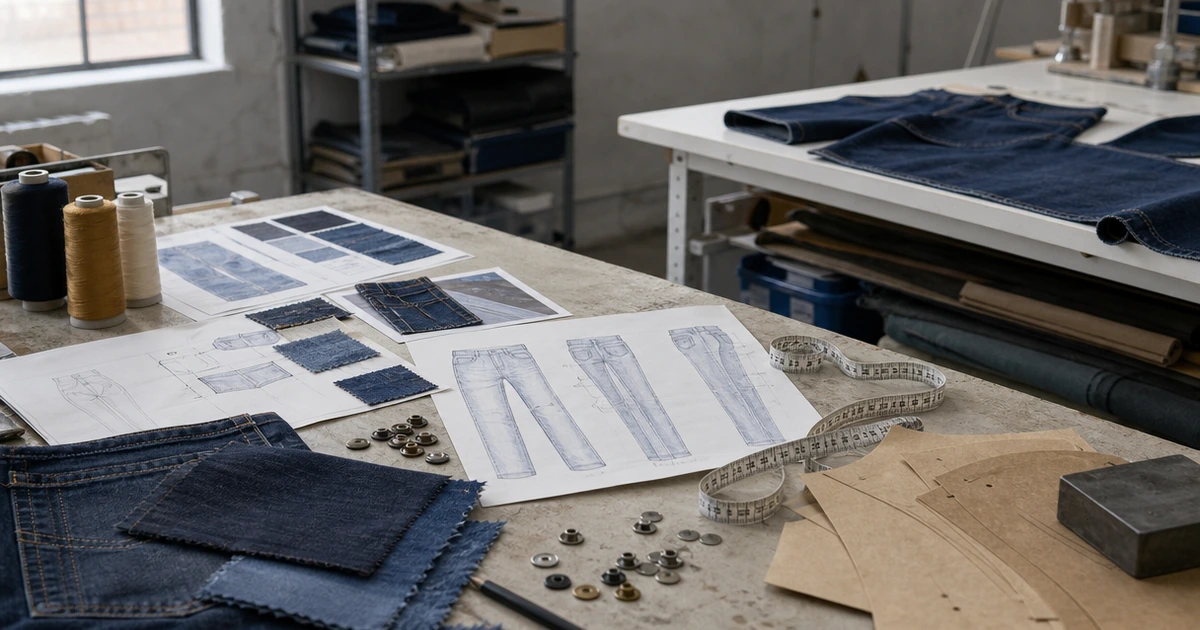
Denim development combines fit engineering, fabric behavior, washing, trims, grading, quality control, and production planning. Therefore, the right manufacturing partner does more than sew a garment. They help translate your design direction into clear production details that your team can repeat as your brand grows.
This guide explains how independent designers can move from a concept to custom jeans, denim jackets, or a small denim collection. It also covers what to prepare, how sampling works, how to manage design details, and how to plan a realistic first production run.
1. What Independent Designers Need From a Denim Manufacturer
Independent designers usually need more flexibility than large retailers. For example, you may want a curved back yoke, a wider leg opening, a reconstructed pocket, a specific vintage wash, or a branded leather patch. These details shape your product identity, so they should not disappear during production.
At the same time, many designers enter development with strong visual ideas but limited technical language. Terms such as front rise, back rise, inseam, thigh width, leg opening, shrinkage, and wash tolerance can feel unfamiliar at first. Therefore, a capable denim manufacturer should help turn references into measurable instructions.
A useful production partner should help you:
- Review reference images and identify the key construction details
- Recommend a suitable base fit or develop a new pattern
- Suggest denim fabric options based on your silhouette and wash plan
- Create samples before bulk production
- Confirm buttons, rivets, patches, labels, and packaging
- Explain how MOQ, wash complexity, and fabric availability affect cost
- Keep communication clear during sample revisions and production
In short, designers need a manufacturer that respects the original idea while also identifying the technical details that affect fit, cost, and consistency.
2. Choose the Right Production Route for Your First Collection
Before you begin development, decide how much customization your collection actually needs. This decision affects your budget, timeline, MOQ, and development risk.
(1) Wholesale or Ready-to-Ship Denim
Wholesale works best when speed matters more than a unique silhouette. You select existing styles, then buy available inventory or repeatable products from a supplier.
This route can help boutiques, resellers, and early brands test demand quickly. However, it offers limited control over fit, fabric, wash, and construction details.
(2) Private Label Denim
Private label usually starts with an existing factory fit or style. Then, you add your own woven labels, patches, hang tags, packaging, or selected wash options.
This route gives independent designers a more branded product without requiring a completely new pattern. Therefore, it can work well when you want to validate your audience before investing in full development.
For more detail on labels, hardware, patches, and packaging, read our private label denim branding guide.
(3) Full Custom Denim Development
Full custom development gives you the greatest control. You can develop your own fit, measurements, pockets, wash direction, trims, labels, and packaging.
However, full custom development also requires more decisions and sample approval steps. Therefore, this route suits designers whose silhouette, wash, or construction details form a major part of their brand identity.
3. Turn Your Design Concept Into a Production Brief
You do not need a finished technical package before you contact a manufacturer. However, clearer information leads to more accurate quotations, faster sampling, and fewer revisions.
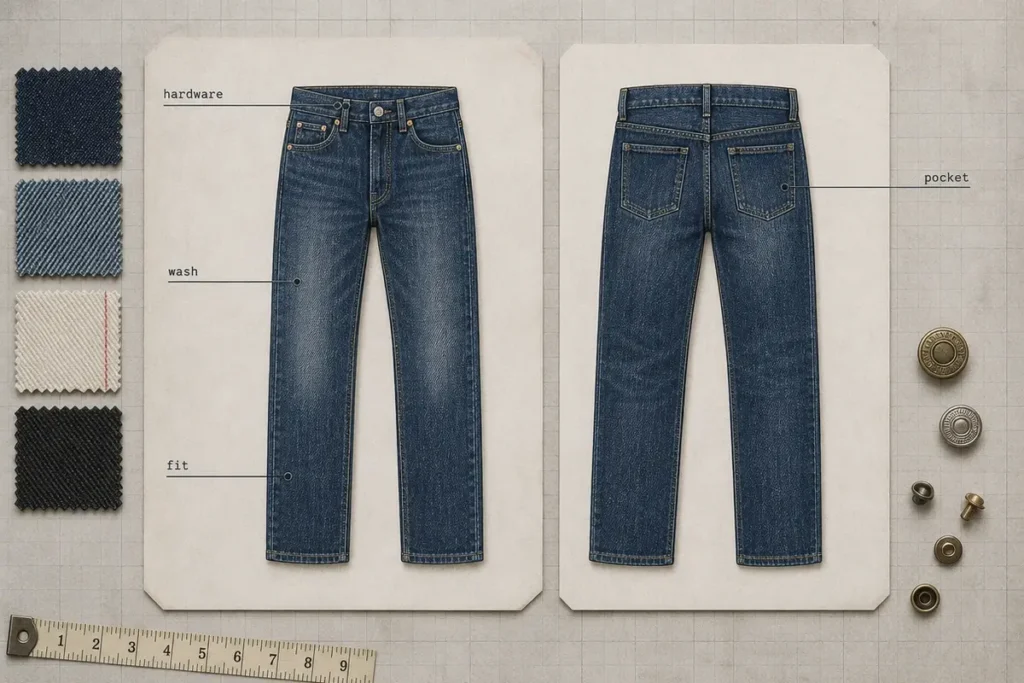
First, gather your visual references. Then, organize them into a simple production brief. Your first brief can include:
- Front, back, and side reference images
- A sketch or flat drawing, if available
- Product category, such as jeans, trucker jacket, skirt, shorts, or denim set
- Target fit, such as baggy, straight, flare, wide-leg, slim, or cropped
- Target customer, including men’s, women’s, unisex, or youth sizing
- Preferred fabric weight, stretch level, and color
- Wash references showing fade level, distressing, and texture
- Pocket shape, stitching details, and construction notes
- Button, zipper, rivet, patch, label, and packaging ideas
- Base size, size range, and target quantity
- Target retail price, shipping destination, and launch timing
In addition, include physical samples whenever possible. A garment you own can communicate proportion, hand feel, pocket placement, and wash direction faster than a written description alone.
Nevertheless, do not ask a factory to copy another brand’s product exactly. Instead, use reference items to explain fit, construction, and wash direction, then develop details that make the final product your own.
4. Develop the Fit Before You Focus on Decoration
Many independent designers begin with a wash idea, a rhinestone layout, or a graphic detail. However, fit should come first because fit determines whether customers will wear the product again.
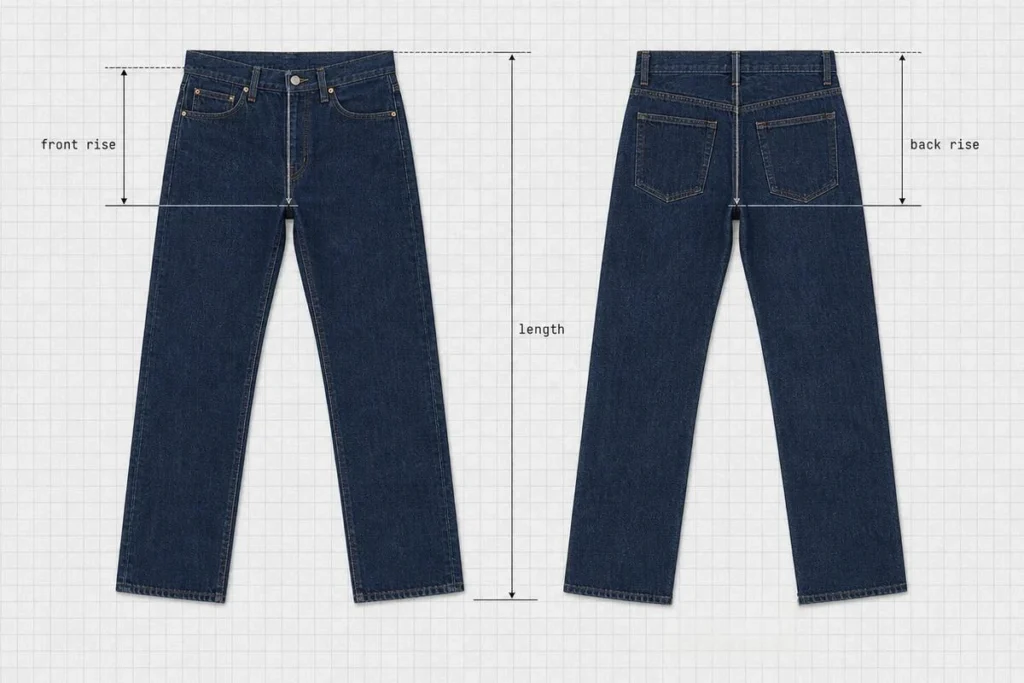
For jeans, focus on these key measurement points:
- Front rise and back rise
- Waist and hip circumference
- Thigh width
- Knee width
- Leg opening
- Inseam
- Outseam
- Pocket placement
- Yoke shape
- Overall silhouette
For denim jackets, focus on shoulder width, chest width, body length, sleeve length, armhole shape, collar proportion, and hem structure.
Next, choose a base size for fitting. For example, you may develop a women’s size S or 28 first, then grade the remaining sizes after you approve the base fit. This approach gives the development team a clear reference point.
Moreover, fit approval should involve actual wear testing. Ask your fit model to sit, walk, bend, and raise their arms. Then, record every adjustment in writing. As a result, the next sample can address specific issues instead of relying on memory.
For a more detailed breakdown, see our jeans fit development and size grading guide.
5. Understand the Denim Sampling Process
Sampling turns your concept into a physical product. Therefore, treat every sample stage as a decision point, not simply as a formality.
For most styles, each sample round takes roughly 7-15 days depending on pattern changes, wash complexity, and trim sourcing. Plan at least two to three rounds into your launch calendar.
(1) Prototype Sample
The prototype checks the general silhouette and construction. At this stage, you can confirm whether the pocket shape, yoke, seam placement, and overall proportion match your idea.
You may not use final fabric, hardware, or wash details in the first prototype. Instead, focus on the structure first.
(2) Fit Sample
After you review the prototype, the factory can adjust measurements and pattern details. For example, you may ask for a higher rise, more room through the thigh, a wider leg opening, or a shorter jacket body.
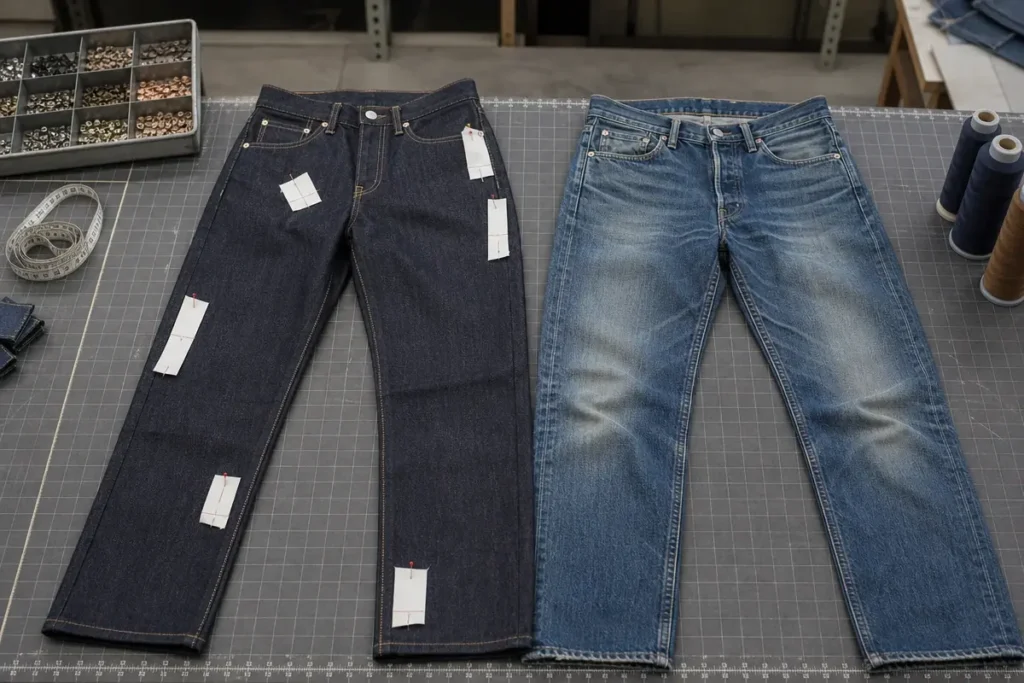
Then, test the revised fit sample on a suitable model. Record your comments with photos, arrows, and measurements whenever possible.
(3) Wash Sample
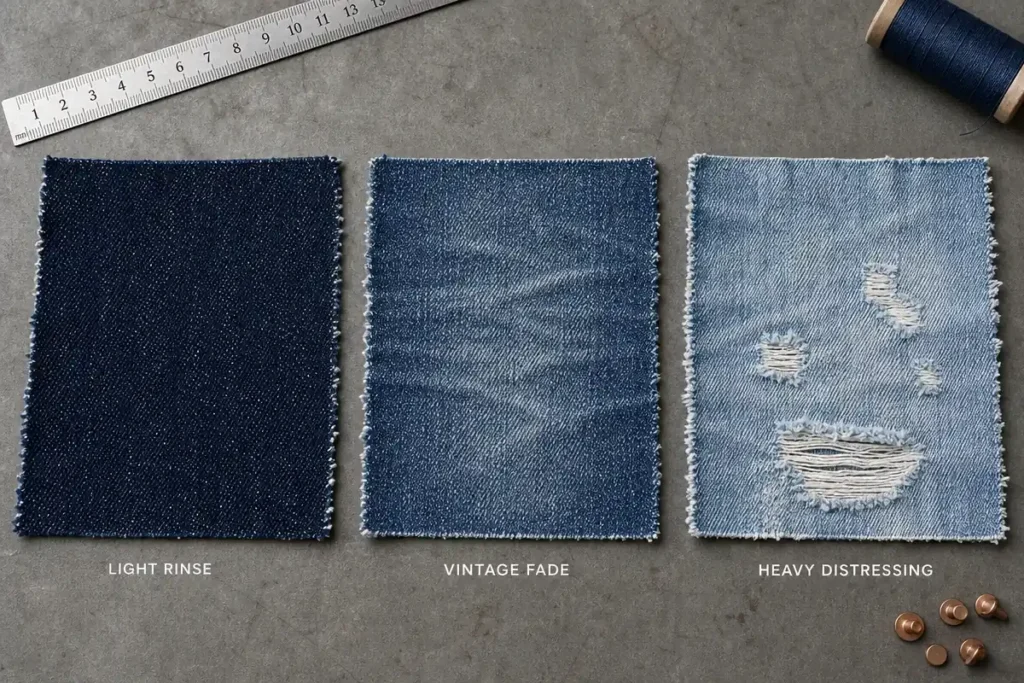
Denim changes after washing. Fabric can shrink, fade, soften, wrinkle, or react differently depending on the treatment. Therefore, you should approve the wash separately from the initial fit whenever the wash plays a major role in your design.
A wash sample can help you confirm:
- Indigo shade and fade contrast
- Hand feel after washing
- Distressing level
- Whiskers, sanding, laser effects, or abrasion
- Shrinkage after washing
- Fabric damage risk
- Compatibility with prints, embroidery, or embellishments
For more information about distressing and wash development, see our distressed and ripped jeans sourcing guide.
(4) Pre-Production Sample
The pre-production sample, often called a PP sample, should represent the final bulk product. It should include the approved fabric, fit, wash, hardware, labels, packaging, and construction details.
Do not begin bulk production until you approve this sample in writing. This step protects both your brand and the production team because everyone works from the same final standard.
6. Choose Fabric, Wash, and Trims as One System
Fabric, wash, and trims should work together. For example, a heavyweight rigid denim can support a structured workwear look, while a stretch fabric may better suit skinny or body-contouring fits.
Likewise, your wash plan should match the fabric composition. A heavy enzyme wash may affect stretch recovery differently from rigid cotton denim. Therefore, confirm the fabric before you finalize the wash.
Consider these questions before sampling:
- Do you want rigid denim, comfort stretch, or high stretch?
- Does the design need a soft drape or a structured shape?
- Will the garment use a light rinse, vintage fade, acid wash, or heavy distressing?
- Does the fabric need to support embroidery, screen print, rhinestones, or laser work?
- Does your target retail price support selvedge, organic cotton, or premium heavyweight denim?
In addition, decide your branding details early. Buttons, rivets, zippers, Jacron patches, leather patches, woven labels, care labels, hang tags, and packaging all affect cost and lead time.
For fabric selection advice, read our denim fabric guide.
7. Plan MOQ, Cost, and Timeline Realistically
Independent designers often want to start small. That approach can reduce inventory risk and help you test product-market fit. However, small-batch manufacturing usually raises the unit cost because development, cutting, washing, and trim setup costs spread across fewer units.
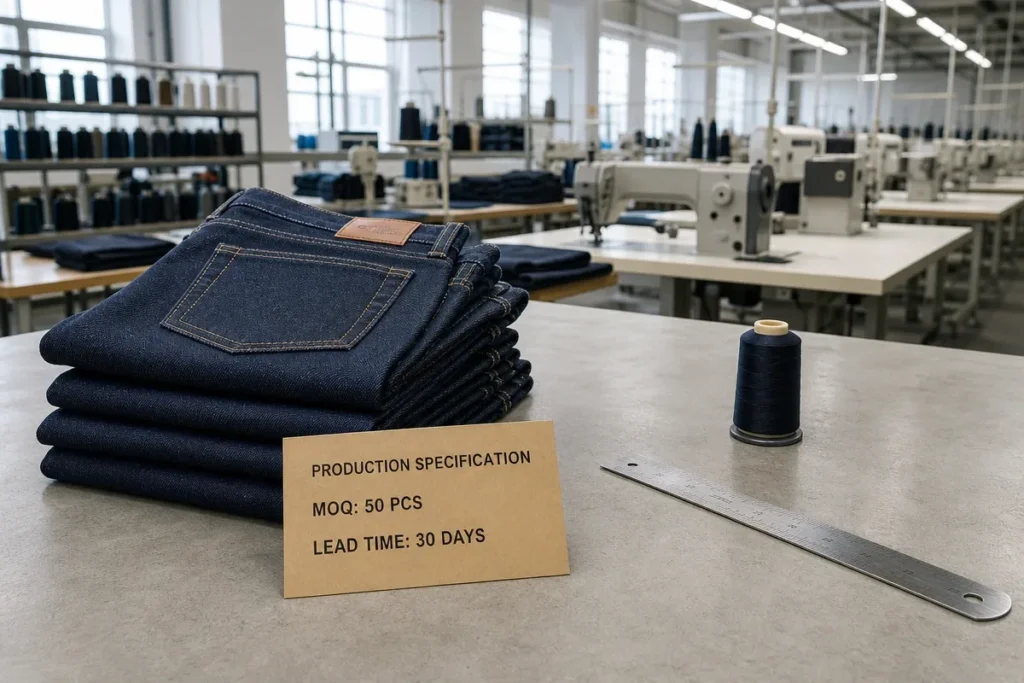
For selected styles with available fabrics and manageable wash and trim requirements, a project may start from 50 pieces per style. However, custom fabric development, special hardware, complex washing, multiple colorways, or detailed embellishments may require a higher MOQ.
Instead of asking only, “What is your MOQ?”, ask these questions:
- What MOQ applies to my exact fabric and wash plan?
- Can I use stock fabric for the first run?
- Which custom details increase the MOQ?
- What sample costs apply before bulk production?
- Which costs can decrease on repeat orders?
- Can I begin with one or two key styles instead of a full collection?
Furthermore, plan enough time for revisions. After you approve the final PP sample, bulk production for a typical order takes about 30 days from confirmation to shipment — plus transit time to your destination. A simple sample may move quickly, while a fit with custom pattern changes, special washes, or custom trims may need several approval rounds.
For a fuller cost framework, see our custom jeans manufacturing cost guide.
8. Manage Design Records and Reduce Communication Risk
Independent designers should keep control of design information throughout development. You cannot remove all business risk, but you can reduce confusion and create a clear approval trail.
First, date every sketch, sample comment, and measurement update. Next, name each file clearly, such as “Style 01 Fit Sample Comments V2.” Then, confirm major changes in writing after calls or messaging discussions.
You should also:
- Share original files only with suppliers you have vetted
- Use a written confidentiality agreement when appropriate
- Mark confidential technical files clearly
- Keep photos of each sample and each approved revision
- Record fabric codes, wash references, trim details, and measurement tables
- Confirm the approved PP sample before bulk production
- Keep all final specifications in one production file
As a result, you reduce the chance that different teams work from different instructions. Clear documentation also makes future reorders easier.
9. Common Mistakes Independent Designers Should Avoid
First, avoid changing too many variables in one sample round. If you change the fit, fabric, wash, pocket shape, and trims at the same time, you may not know which change created the new result.
Second, avoid choosing fabric only by price. A lower-cost fabric can create problems with recovery, shrinkage, color, or wash performance. Therefore, compare fabric samples before you commit.
Third, avoid approving a wash from a screen image alone. Lighting, camera settings, and image editing can change how denim looks. Whenever possible, review a physical sample.
Fourth, avoid producing too many styles in the first drop. A focused collection with one or two strong fits often gives you clearer feedback and a more manageable budget.
Finally, avoid skipping the PP sample to save time. A short delay during development can prevent a much more expensive bulk-production issue later.
10. How Aeedenim Supports Independent Designers
Aeedenim works with independent designers, small studios, streetwear labels, and growing fashion brands that need custom denim jeans manufacturer.
We can support projects with:
- Custom jeans, denim jackets, skirts, shorts, and denim sets
- Fabric sourcing and fabric selection support
- Pattern and fit development
- Denim washing and finishing options
- Sample development before bulk production
- Private-label buttons, rivets, patches, labels, and packaging
- Low-MOQ options based on project requirements
- Production planning after final sample approval
- Export packaging and shipping coordination
To start efficiently, send us your reference images, target quantity, base size, size range, fabric direction, wash idea, branding requirements, shipping destination, and target launch date.
11. FAQ
(1) Can a denim manufacturer work from a sketch only?
Yes. A sketch, reference images, and written notes can start the development process. However, measurements, sample garments, and a basic tech pack can improve accuracy and reduce sample revisions.
(2) Do independent designers need a finished tech pack?
No. You can begin with a clear design brief. However, a tech pack helps you record measurements, fabric choices, trims, wash references, and construction details as development progresses.
(3) What is the MOQ for custom denim production?
MOQ depends on the fabric, wash, trims, size range, and design complexity. Some selected projects may start from around 50 pieces per style, more complex projects may require a higher quantity.
(4) How many samples do I need before bulk production?
Most projects need at least a prototype or fit sample and a final PP sample. However, complex washes, new patterns, or detailed embellishments may require additional sample rounds.
(5) Can I add custom labels and branded hardware?
Yes. You can develop custom buttons, rivets, patches, woven labels, care labels, hang tags, and packaging. Confirm these details early because they can affect cost and production timing.
(6) How can I reduce the risk of production mistakes?
Prepare clear references, document all revisions, approve the final PP sample in writing, and keep a single final production file with the confirmed measurements, fabric, wash, trims, labels, and packaging details.
Start Your Custom Denim Development
A strong denim collection begins with a clear idea, but it succeeds through disciplined development. Therefore, focus on fit, fabric, wash, construction, and sample approval before you move into bulk production.
If you are an independent designer developing custom jeans or denim products, contact Aeedenim with your references and project requirements. Our team can help you evaluate the right development path for your first sample and production plan.