manager@aeedenim.com
Custom Denim Shorts Manufacturer Guide: Fit, Inseam, Wash and Sizing

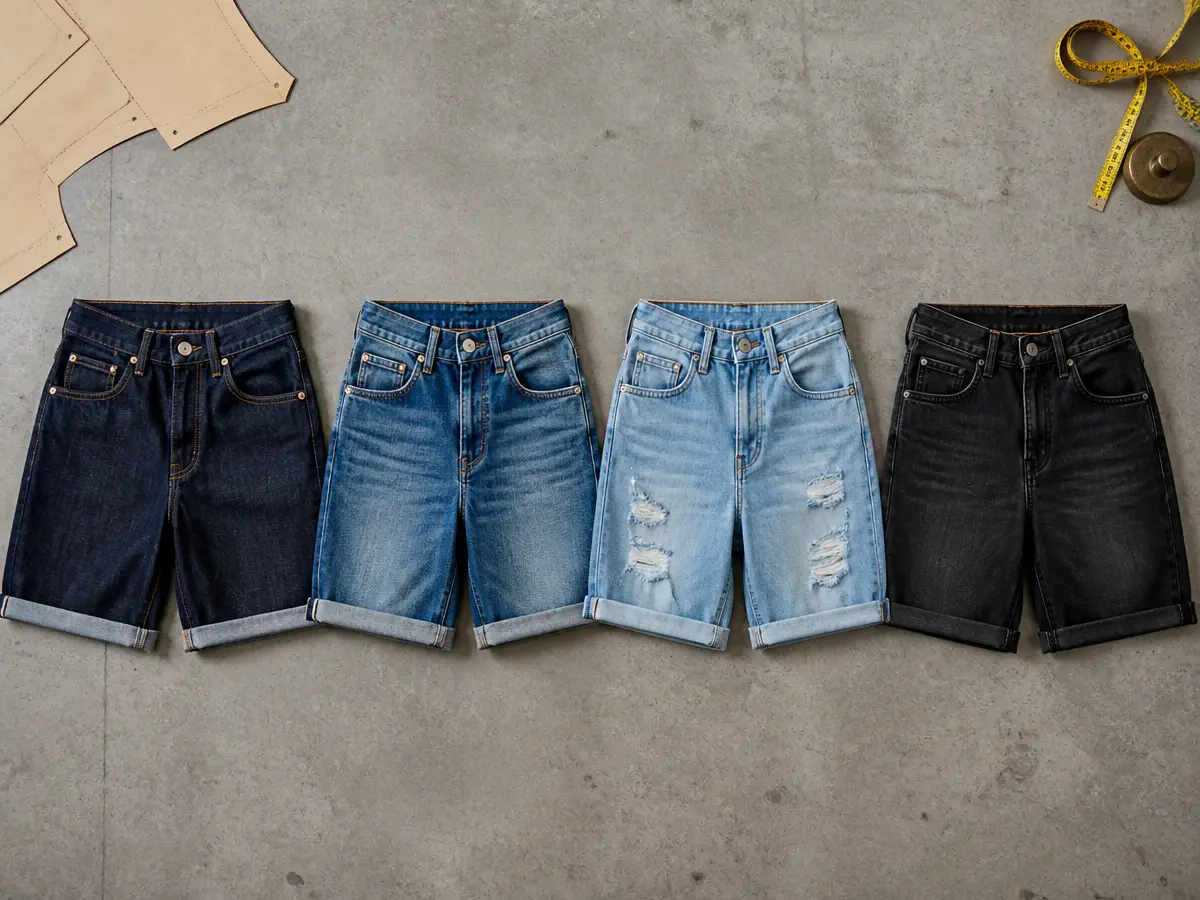
Denim shorts and jorts can give a denim collection a distinct seasonal product category. However, brands often treat them as shortened jeans and move directly into production without reviewing the new proportions.
That approach can create fit problems. A jean pattern may look balanced at full length, yet the same rise, leg opening, or wash placement can look very different once the garment ends above the knee or at mid-thigh.
Therefore, working with a custom denim shorts manufacturer requires a product-specific development process. You need to review the inseam, rise, leg opening, fabric weight, wash direction, hem finish, and size ratio as one complete system.
This guide explains how brands can develop custom denim shorts and jorts with clearer specifications, more consistent samples, and better production planning.
1. Why Denim Shorts Need Their Own Development Process
A denim short may begin with a jeans-inspired fit, but it should not simply copy a jeans pattern. Once you shorten the leg, the garment proportions change immediately.
First, the rise becomes more visible. On full-length jeans, the leg length balances the front and back rise. On shorts, however, the rise, fly length, and hip shape become stronger visual features.
Next, the leg opening becomes more important. A leg opening that looks narrow on straight-leg jeans may look too wide on a short inseam. Therefore, review the leg opening together with the finished inseam length.
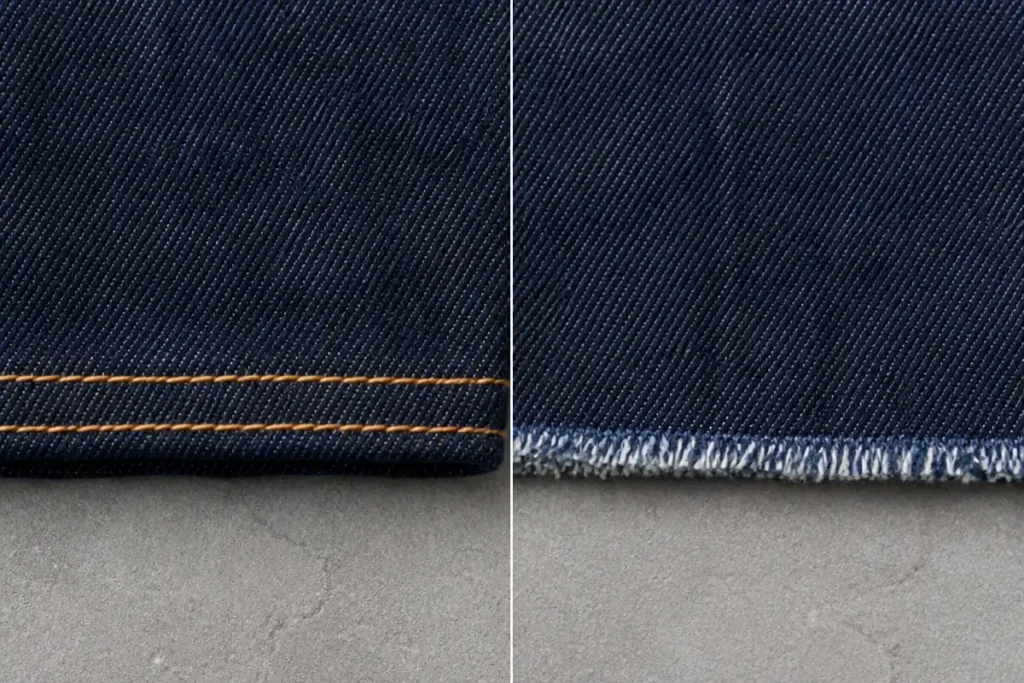
In addition, the hem finish changes the final appearance. A folded hem creates a cleaner and more structured look. In contrast, a raw or frayed hem creates a more casual, distressed, or streetwear-focused result.
Finally, shorts expose fit issues more clearly. If the original jean pattern has seat pulling, crotch pressure, waistband gapping, or pocket-placement problems, customers may notice them more easily on a shorter garment.
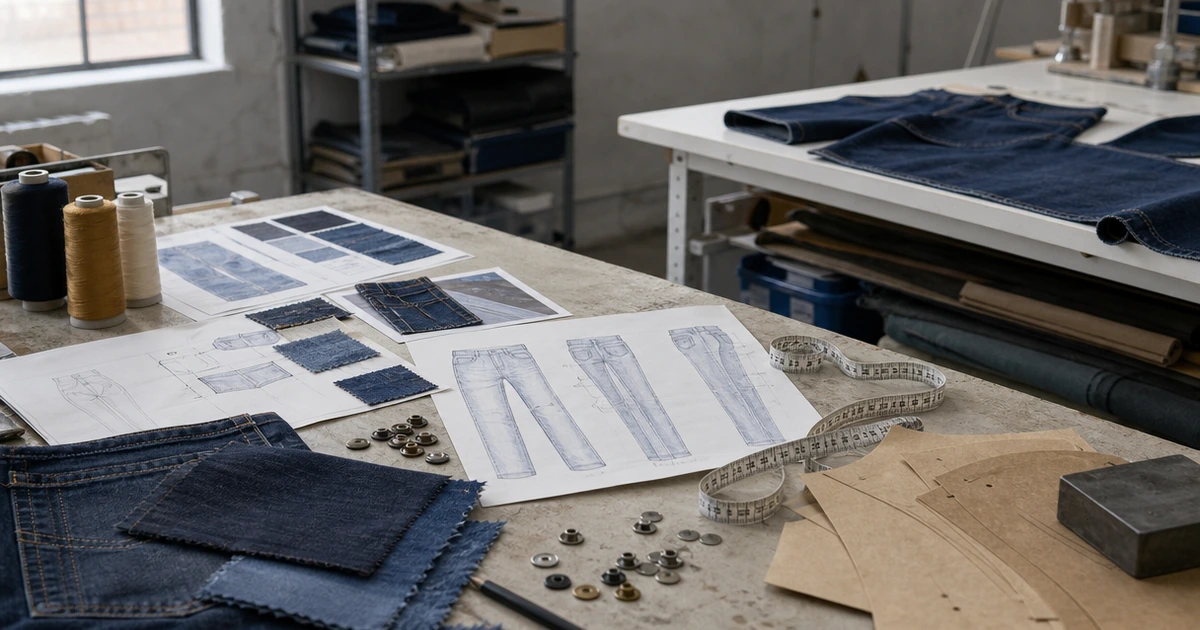
For this reason, treat each shorts style as its own product development project. You can use an existing jeans fit as a starting point, but you should still confirm the shorts-specific pattern through sampling.
2. Choose the Inseam Length Before You Start Sampling
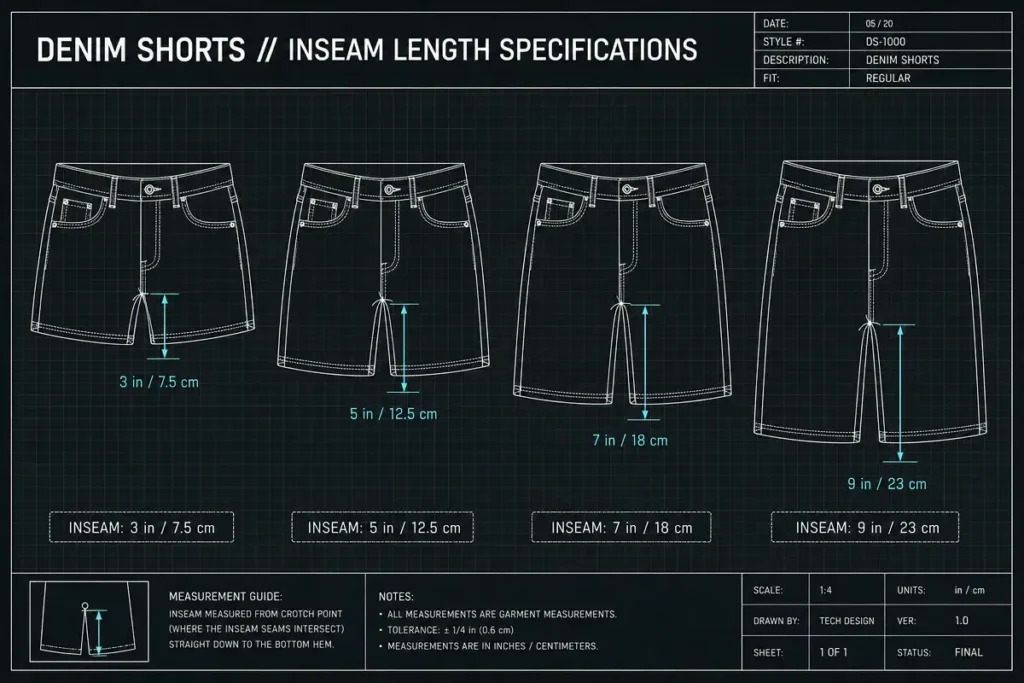
Inseam length strongly affects how customers perceive a pair of denim shorts. Therefore, choose your target length before you request a quotation or begin pattern development.
Common inseam directions include:
| Inseam Length | Typical Product Direction | Development Focus |
| 3 in / 7.5 cm | Short fashion styles | Check seat coverage, rise balance, and hem finish |
| 5 in / 12.5 cm | Short to mid-length denim shorts | Confirm leg opening and overall proportion |
| 7 in / 18 cm | Mid-length shorts and many jorts styles | Review thigh ease, hem position, and wash placement |
| 9 in / 23 cm | Longer shorts, Bermuda styles, and relaxed jorts | Check knee position, leg shape, and grading |
These measurements serve as general starting points, not fixed rules. Your target customer, intended silhouette, fit block, and brand identity should guide the final decision.
For example, a relaxed jorts style may need a wider leg opening and longer inseam. Meanwhile, a fitted denim short may need a more controlled leg opening, different pocket position, and a shorter finished length.
Moreover, do not launch too many lengths in the first order. Each added inseam can create extra pattern work, fit review, grading decisions, and sampling cost. Instead, begin with one or two priority lengths, then use customer feedback to guide future development.
3. Select Denim Fabric Weight for the Intended Fit
Fabric weight affects the drape, structure, wash result, and wearing comfort of denim shorts. Therefore, choose the fabric after you define the silhouette and wash direction.
For softer summer shorts, brands often consider lighter or medium-weight denim. For structured jorts, rigid streetwear styles, or workwear-inspired shorts, brands may choose a heavier fabric.
A practical fabric guide includes:
| Fabric Weight | Suitable Direction | Key Consideration |
| 8-10 oz | Lightweight summer shorts and softer silhouettes | Confirm shrinkage and after-wash dimensions |
| 10-12 oz | Core denim shorts and many jorts styles | Balances structure, comfort, and wash flexibility |
| 12-14 oz | Structured jorts and rigid denim styles | Creates a stronger shape and more visible wash texture |
However, fabric weight alone does not determine the final result. Fabric composition also matters. Rigid cotton denim, comfort-stretch denim, and high-stretch denim react differently during cutting, sewing, washing, and wear.
Beyond that, confirm the wash on the intended bulk fabric. A stone wash can create a very different effect on lightweight denim than on heavyweight rigid denim. Therefore, do not approve a wash reference without confirming the fabric composition, weight, and wash direction together.
For more fabric options, read our denim fabric guide.
4. Plan Wash and Distressing for a Shorter Garment Panel
Wash effects require careful planning on denim shorts because the garment has less visible surface area than jeans. As a result, fading, whiskers, sanding, distressing, and hem treatment can appear stronger or more concentrated.
First, review the wash placement. On full-length jeans, whiskers and thigh fading can sit across a larger panel. On shorts, the same wash placement may move too close to the hem or look too heavy for the garment length.
Next, decide whether the hem should stay clean, raw, distressed, or frayed. A folded hem creates a more polished finish. In contrast, a raw hem can support vintage, Y2K, casual, or streetwear directions.
For frayed hems, confirm the following before you approve a bulk order:
- The intended finished length after washing
- The target fray depth and appearance
- The fabric weight and fabric construction
- The wash process used after distressing
- The inspection standard for uneven or excessive fraying
Moreover, compare physical wash samples whenever possible. Screen images can help explain a color direction, but they cannot fully show the fabric hand feel, fading depth, abrasion level, or final hem texture.
For more detail about wash and distressed effects, read our distressed and ripped jeans sourcing guide.
5. Build a Shorts-Specific Size Ratio
Do not automatically copy the size ratio from your jeans order. Shorts can sell differently because customers may choose a different fit, length, or styling approach for warm-weather products.
First, use your own previous sales data if you have it. Review sales by size, returns by size, customer comments, and exchange reasons. Then, compare that information with the target fit of the new shorts style.
For example, a loose jorts fit and a fitted denim short may attract different customers and create different size demand. Therefore, build a separate size ratio for each fit category instead of using one ratio across all denim products.
If you do not yet have shorts sales data, start with your jeans data as a reference. However, treat it only as a starting point. Keep the first order focused, review sell-through after launch, and adjust the next size ratio based on real customer behavior.
Also, confirm the base size and grading rules before production. A small change in rise, hip, thigh, or leg opening can change how customers experience the fit.
For guidance on size development, read our jeans fit development and size grading guide.
6. Lock the Construction Details Before Bulk Production
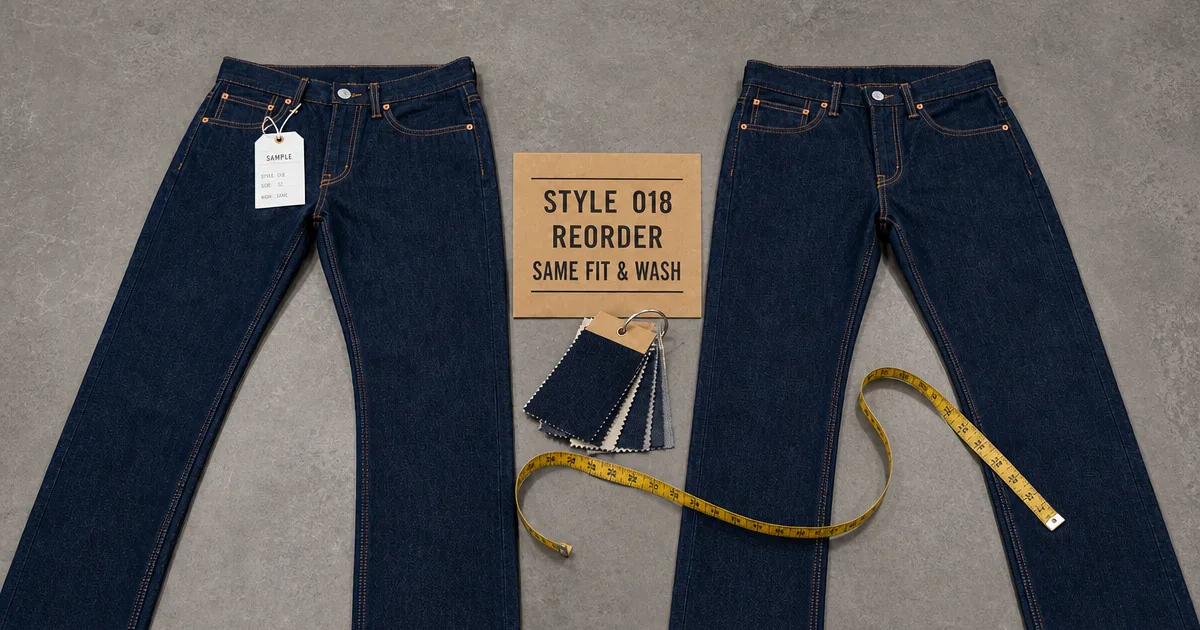
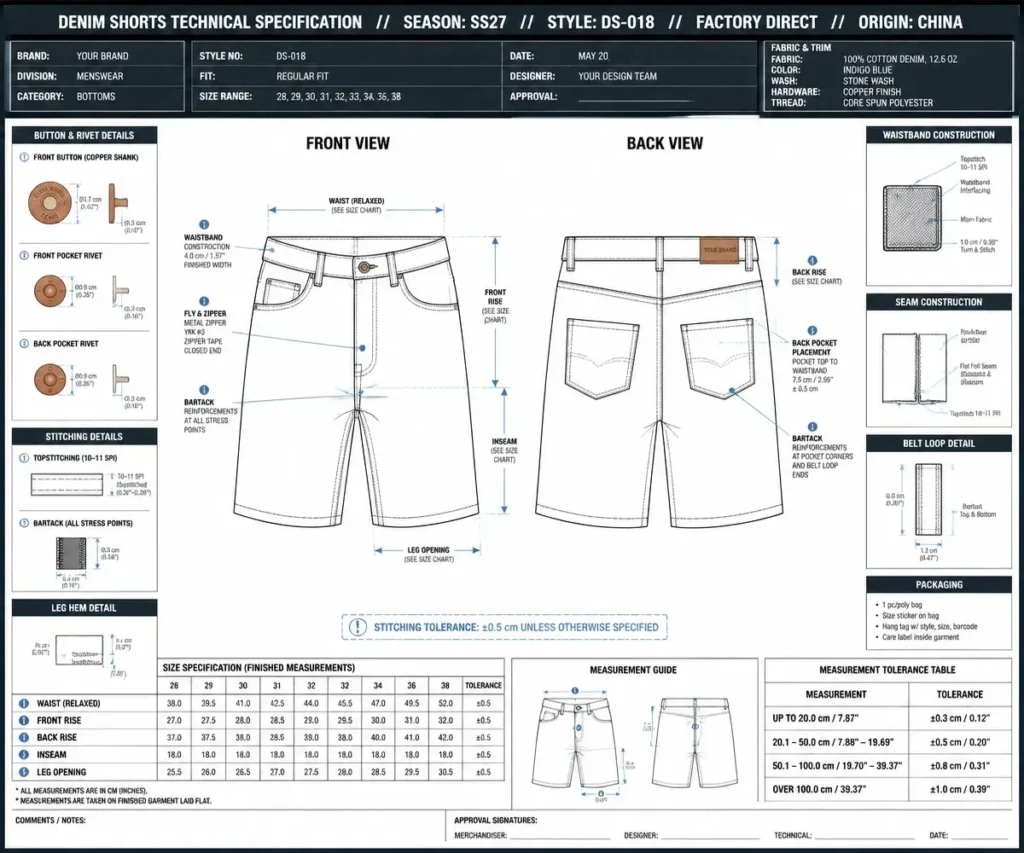
After you approve the fit and wash, document every key construction detail. This step helps you maintain consistency between the approved sample and bulk production.
Your final specification should include:
- Front rise and back rise
- Inseam and finished outseam
- Leg opening and hem method
- Waistband construction
- Fly length and zipper specification
- Pocket bag depth and pocket-opening position
- Back-pocket size, placement, and stitch design
- Belt-loop count and placement
- Bartack placement at stress points
- Stitch density and thread color
- Button, rivet, zipper, patch, and label details
- Care-label content and packaging requirements
- Measurement tolerances for key points
On top of that, keep clear photos of the approved sample. Photograph the front, back, side, waistband, pockets, hem, wash details, labels, and hardware.
As a result, your manufacturer, quality-control team, and internal product team can work from the same standard.
7. Confirm MOQ, Sampling, and Production Timing
MOQ for custom denim shorts depends on the exact project. Fabric availability, wash complexity, color options, inseam variations, custom trims, size range, and packaging requirements can all affect the minimum quantity.
Therefore, ask your supplier for MOQ in a clear format:
- MOQ per style
- MOQ per color
- MOQ per wash
- MOQ per inseam length, if applicable
- MOQ for custom buttons, patches, labels, and packaging
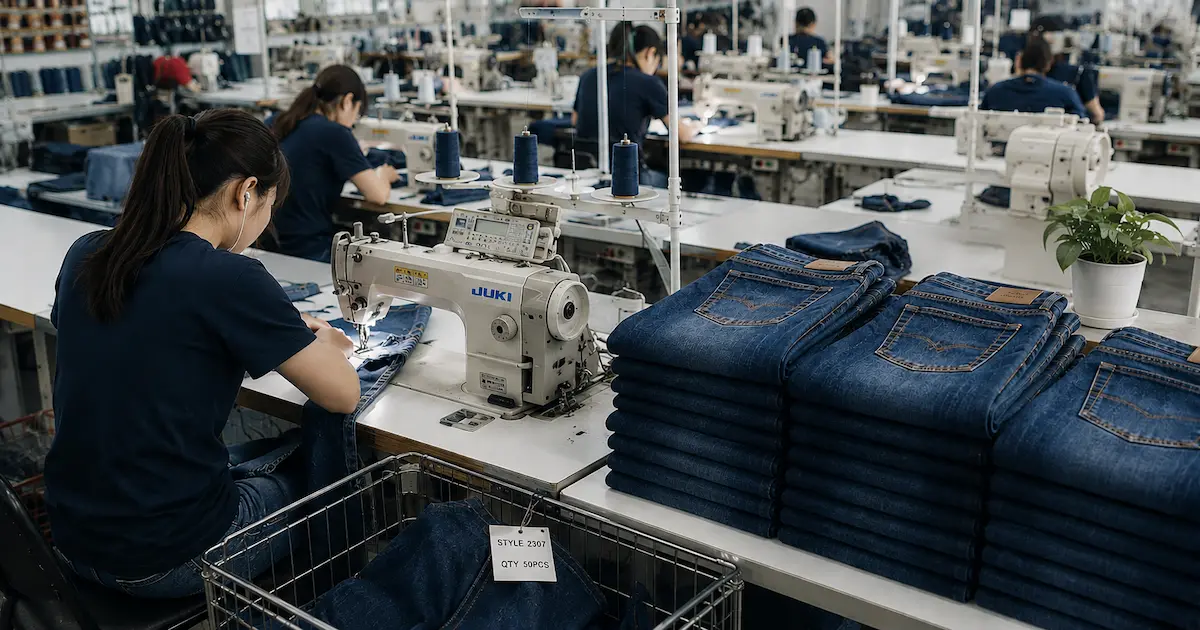
- MOQ when using stock fabric instead of custom-developed fabricAeedenim works from 50 pcs per style for shorts projects using stock or in-house developed denim, so smaller test runs can be validated before scaling.
Aeedenim works from 50 pcs per style for shorts projects using stock or in-house developed denim, so smaller test runs can be validated before scaling.
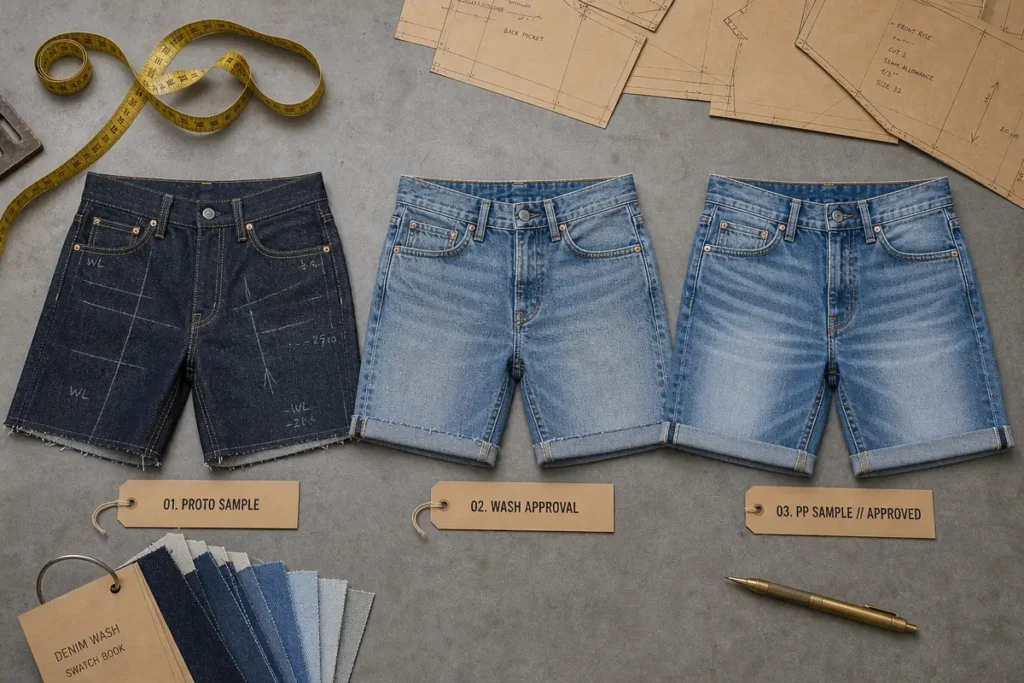
Next, plan the sample stages. A shorts project may include a fit sample, a wash confirmation sample, and a final PP sample. However, the project may need another sample if you change the fabric, inseam length, hem finish, wash treatment, or trim specifications after approval.
For this reason, freeze the key construction details before the wash-confirmation stage. It is easier to correct a pattern issue during fit development than after the washing team develops the final wash standard.If you are planning a first custom order, read our small batch denim production guide.
8. Plan Spring and Summer Delivery Early
For Northern Hemisphere spring and summer launches, work backward from your required delivery date. Include time for sampling, fabric confirmation, wash approval, production, inspection, export packing, and shipping.
First, confirm the target delivery month. Next, discuss the expected production window with your supplier. Then, reserve fabric and washing capacity once you approve the final sample.
In addition, share an estimated forecast even before you issue a final purchase order. A forecast helps your supplier identify potential fabric, trim, washing, or production-capacity risks earlier.
If you plan denim shorts and jeans in the same season, discuss the production sequence in advance. Both product categories may require similar fabric, washing, sewing, and quality-control resources.
Therefore, early planning helps you avoid unnecessary production pressure close to your launch date.
9. How Aeedenim Supports Custom Denim Shorts and Jorts Projects
As a custom denim shorts manufacturer based in Guangzhou, China, Aeedenim works with fashion brands, streetwear labels, private-label buyers, and independent designers developing custom denim shorts and jorts.
For shorts projects, our team can help review:
Reference images and target fit direction
Inseam length and leg-opening requirements
Denim fabric weight and composition
Wash, distressing, raw hem, and frayed hem direction
Size range and size-ratio planning
Custom buttons, rivets, patches, labels, and packaging
Sample development before bulk production
Production planning, export packing, and shipping requirements
You can also review our existing denim shorts styles for product references and customization direction.
FAQ
1. Can I use an existing jeans pattern to make denim shorts?
You can use an existing jeans pattern as a starting point. However, you should review the rise, leg opening, inseam, hem finish, and overall proportion through a shorts-specific fit sample.
2. What is the MOQ for custom denim shorts?
MOQ depends on the fabric, wash, color, size range, inseam variation, trims, and packaging. Ask your manufacturer to confirm MOQ per style, color, wash, and length before you compare quotations.
3. How many inseam lengths should I offer for one shorts style?
For a first order, one or two priority lengths often create a more manageable development plan. Each additional length can require extra pattern adjustments, fit review, grading work, and sample confirmation.
4. Are denim shorts cheaper than jeans?
Shorts usually use less fabric than full-length jeans. However, the final unit cost also depends on pattern development, wash complexity, trims, cutting, sewing, inspection, order quantity, and packaging.
5. Do raw hems need special quality control?
Yes. You should confirm the finished length, fray direction, wash effect, and inspection standard before bulk production. This helps control excessive fraying and inconsistent hem appearance.
6. When should I begin sourcing custom denim shorts?
Start from your target delivery date and work backward. Allow enough time for sample development, fabric confirmation, wash approval, bulk production, inspection, and shipping.
Start Your Custom Denim Shorts Project
Strong denim shorts require more than a shortened jeans pattern. They need the right inseam, fit balance, fabric weight, wash standard, hem method, and size plan.
If you are developing custom denim shorts or jorts, contact Aeedenim with your target inseam length, fit reference, fabric preference, wash direction, size range, target quantity, and delivery date. Our team can help you build a clearer plan from sample development to bulk production.