manager@aeedenim.com
The True Cost of Custom Jeans Manufacturing: Pricing Breakdown for US and European Brands

For US, UK and European fashion brands, one of the most common questions when starting a denim project is: how much does it cost to manufacture custom jeans in China?
The honest answer is that there is no single price per pair. Custom jeans manufacturing cost depends on fabric, wash, trims, quantity, sampling, packaging, shipping and import costs.
A simple rinsed jean made with available stock fabric will cost less than a heavily washed selvedge jean with custom buttons, branded leather patches and premium packaging. Understanding these cost drivers helps brands plan budgets more realistically before sampling begins.
This guide breaks down the main cost factors behind custom jeans production and explains how brands can compare factory quotations more accurately.
Note: All cost ranges in this guide are for general planning only. Final pricing depends on fabric availability, design complexity, order quantity, exchange rates, freight market conditions and current duty or tariff rules.
1. The Main Cost Components of Custom Jeans
A custom jeans quote usually includes several cost components. Understanding these parts helps you see where your budget goes and which details can be adjusted.
| Cost Component | What It Includes | Typical Share of Unit Cost |
| Fabric | Denim material, weight, composition, stock or custom fabric | 30-45% |
| Washing | Rinse, enzyme, stone, acid, snow wash or special finishing | 15-25% |
| Trims and Hardware | Buttons, rivets, zippers, labels, patches and tags | 5-10% |
| Sewing Labor | Cutting, stitching, assembly, pressing and finishing | 20-30% |
| Packaging | Poly bags, hang tags, cartons or branded packaging | 3-8% |
| Sampling and Development | Pattern making, proto sample, size set and PP sample | Varies by project |
These percentages are only planning references. The final cost structure depends on your design, quantity, fabric and production requirements.
2. Fabric: The Largest Cost Variable
Fabric is usually the biggest cost factor in custom jeans manufacturing. The price per meter can vary significantly based on weight, composition, origin, availability and certification.
| Fabric Type | Reference Cost Range per Meter | Typical Use |
| Standard 11-13oz cotton denim, stock fabric | USD 3-5 | Basic jeans and everyday styles |
| Stretch denim with 1-2% elastane | USD 3.5-6 | Slim fit, skinny jeans and comfort styles |
| Organic cotton denim | USD 5-8 | Sustainability-focused collections |
| Heavyweight denim, 14oz+ | USD 5-10 | Structured jeans and denim jackets |
| Premium selvedge denim | USD 8-15+ | Heritage, raw denim and limited drops |
A standard pair of jeans may require around 1.3-1.5 meters of fabric, depending on size, fit and cutting efficiency. Wide-leg jeans, oversized styles and larger size ranges may require more fabric.
Stock fabric is usually more practical for small-batch production because it is already available. Custom-woven fabric gives more control over color, texture, composition and weight, but usually requires higher MOQ and longer development time.
3. Washing: Where Denim Quality Becomes Visible
Washing transforms denim from plain fabric into the final product. A rinse wash is simpler and more cost-effective, while a heavy snow wash, acid wash, distressing or hand whisker effect requires more labor, time and quality control.
| Wash Type | Relative Cost Level | Best For |
| Rinse wash | Lower | Clean, dark and basic denim |
| Enzyme wash | Low to medium | Softer hand feel and slight fading |
| Stone wash | Medium | Classic vintage denim look |
| Acid wash | Medium to high | High-contrast streetwear effects |
| Snow wash | Higher | Heavy frost and Y2K-inspired styles |
| Laser effect | Medium to high | Precise fading patterns or logo effects |
| Hand distressing / whiskers | Higher | Premium streetwear and worn-in details |
A factory with in-house washing or stable washing partners under clear quality control can better manage sample-to-bulk consistency.
Complex washes may also increase defect risk, especially when combined with stretch fabric, embroidery, rhinestones or heavy distressing. For these styles, sample testing is important before bulk production.
4. Trims and Branding: Small Details, Additive Cost
Custom hardware and branding details increase unit cost, but they can also improve perceived value when they match your brand positioning.
Common trim and branding items include:
| Trim Item | Stock Option Reference Cost | Custom Option Reference Cost |
| Shank button | USD 0.10-0.20 per piece | USD 0.30-0.60 per piece, plus possible mold fee |
| Rivets, set of 6 | USD 0.15-0.30 per set | USD 0.40-0.80 per set |
| Leather / PU patch | USD 0.30-0.80 per piece | USD 0.80-2.00 per piece |
| Woven main label | USD 0.10-0.20 per piece | USD 0.20-0.50 per piece |
| Care label | USD 0.05-0.10 per piece | USD 0.10-0.20 per piece |
| Hang tag | USD 0.10-0.20 per piece | USD 0.20-0.50 per piece |
| Branded poly bag | USD 0.10-0.20 per piece | USD 0.30-0.60 per piece |
Actual trim cost depends on material, artwork, mold requirements, MOQ and supplier availability.
Custom trims often have their own MOQ separate from garment MOQ. For example, a brand may order 100 pairs of jeans, but custom buttons may require 500-1000 pieces per design. In that case, the extra trim quantity should be considered in the development budget.
5. MOQ: How Order Quantity Affects Unit Price
Order quantity has a major impact on unit cost. This does not simply mean factories “charge more” for small orders. It means fixed costs are spread across fewer pieces.
Fixed costs may include:
– Pattern making
– Sample development
– Cutting setup
– Washing setup
– Trim sourcing
– Packaging setup
– Production management
– Quality inspection
A 50-piece order and a 500-piece order may require similar development and setup work, but the cost per unit will be higher at lower quantities.
| Order Quantity | Unit Cost Impact | Reason |
| 50 pcs | Higher | Setup and development costs spread across fewer pieces |
| 150 pcs | Medium | Better cost distribution, still flexible for small brands |
| 500 pcs | Lower | Better fabric purchasing and production efficiency |
| 1,000+ pcs | Lowest | Higher production line efficiency and stronger purchasing leverage |
For small brands, the lowest unit price is not always the best target. A lower MOQ can reduce inventory risk and help test the market before scaling.
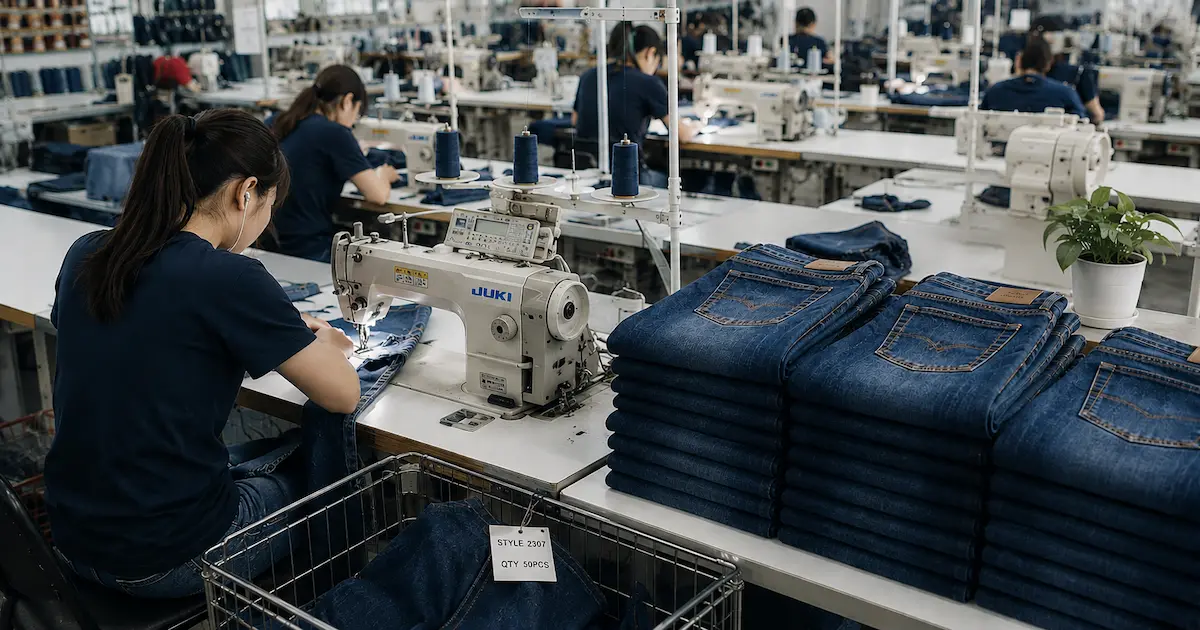
Aeedenim supports both small-batch custom denim development and larger bulk production, with monthly production capacity around 30,000 to 50,000 units depending on product type and production schedule.
6. Sampling: A Development Investment
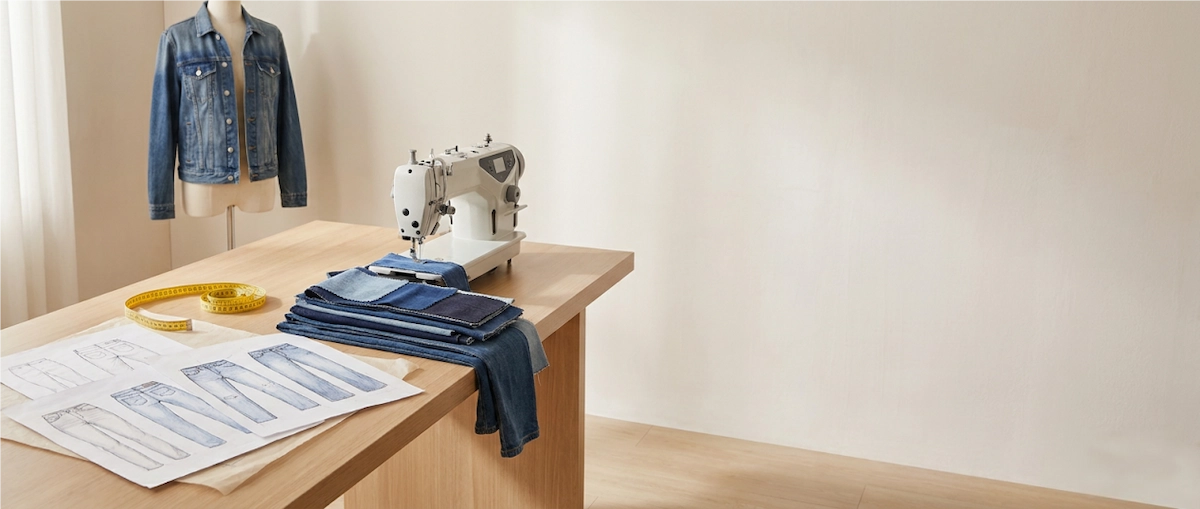
Sampling is often the first cost a brand pays before bulk production. It helps confirm fit, fabric, wash, trims and construction before larger quantities are made.
| Sample Type | Reference Cost Range | Typical Timeline |
| Proto sample, base size | USD 80-150 | 7-15 days |
| Size set sample, 3-5 sizes | USD 150-300 | 7-10 days after proto approval |
| Pre-production sample | USD 100-200 | 7-10 days after size set approval |
A proto sample checks fit and construction. A size set sample checks grading across different sizes. A pre-production sample should use confirmed fabric, wash, trims and construction details.
At Aeedenim, we refund sample fees on your first confirmed bulk order, subject to the agreed project terms. Confirm sample cost, refund policy and shipping cost with your manufacturer before starting development.
7. FOB Cost vs. Landed Cost: What Buyers Should Compare
The factory unit price is not the same as the total cost of getting jeans into your warehouse.
FOB cost usually includes production and delivery to the shipping port. Landed cost includes the total cost after the goods arrive at your destination.
A landed cost calculation may include:
– FOB factory price
– International freight
– Import duties
– Customs broker fees
– Port charges
– Insurance
– Inland delivery
– Taxes where applicable
– Warehousing or handling fees
For example, a pair of jeans quoted at USD 18 FOB may cost more after freight, duties and local charges are added.
Brands should calculate landed cost before setting retail price, wholesale price or profit margin.
8. Hidden Costs Many Brands Forget
First-time importers often focus only on the factory quotation. However, additional costs may appear after production.
| Hidden Cost | Planning Reference | How to Plan |
| Air freight | Higher per unit | Use for samples, rush orders or small drops |
| Sea freight | Lower per unit for bulk | Better for larger shipments |
| Import duties | Varies by HS code and destination | Confirm with customs broker |
| Customs broker fees | Often charged per shipment | Ask for estimates before shipping |
| Port and local delivery charges | Vary by destination | Include in landed cost planning |
| Labeling corrections | Variable | Confirm labels before production |
| Extra packaging protection | Variable | Plan for embellished or premium products |
Some cotton woven jeans categories carry a US duty rate around 16.6%, but you must confirm the final HS classification and duty rate with a customs broker before shipment. Air freight, small shipments and higher import taxes can push your landed cost well above the FOB factory price.
9. How to Get a More Accurate Quote
The more complete your information is, the more accurate the quotation will be.
Before contacting a custom jeans manufacturer, prepare:
– Design reference images
– Tech pack if available
– Fabric preference
– Fabric weight and composition
– Stretch percentage if needed
– Wash effect reference
– Target quantity per style and color
– Size range
– Men’s or women’s fit direction
– Trim and branding requirements
– Packaging requirements
– Target price range if available
– Delivery timeline
– Shipping destination
A professional custom denim manufacturer should explain what drives cost up or down. If a quote seems unusually low, ask what is included and what is not included.
10. How Aeedenim Provides Clearer Denim Pricing
Aeedenim is a custom denim manufacturer in China working with fashion startups, streetwear brands, independent designers and private label collections.
We help brands plan custom denim costs by reviewing:
– Fabric options based on budget
– Wash complexity and cost level
– Trim and branding choices
– MOQ based on design requirements
– Sample development needs
– Packaging options
– Production timeline
– Shipping preparation
Our goal is to help brands understand the cost structure before sampling and bulk production, so each project can be planned more realistically.
11. FAQ
(1) How much does it cost to manufacture custom jeans?
There is no single price. A basic rinsed jean made with stock fabric costs less than a heavily washed selvedge jean with custom hardware and branded packaging. Final cost depends on fabric, wash, trims, quantity, sampling and packaging.
(2) What is the biggest cost in jeans manufacturing?
Fabric is usually one of the largest cost components, often around 30-45% of the unit cost. Heavyweight, selvedge, organic or custom-woven denim can increase fabric cost.
(3) Does MOQ affect unit price?
Yes. Fixed costs such as pattern making, sampling, cutting setup and washing setup are spread across more units at higher quantities, reducing the per-unit cost.
(4) Are sample fees refundable?
Sample fee policies vary by project. At Aeedenim, sample fees may be refunded on the first confirmed bulk order according to the confirmed project terms. Brands should confirm the sample policy before starting development.
(5) What shipping costs should I budget for?
Shipping cost depends on order volume, carton size, weight, route, freight market and delivery terms. Air freight is faster but more expensive per unit, while sea freight is usually more cost-effective for bulk orders.
(6) What is landed cost?
Landed cost is the total cost of getting products into your warehouse. It may include FOB factory price, freight, duties, customs broker fees, port charges, taxes and inland delivery.
(7) Why do different factories quote very different prices?
Differences may come from fabric quality, wash expertise, trim grade, QC process, production efficiency, order quantity and what is included in the quotation. A very low quote may not include the same quality level or service scope.
Get a Transparent Quote for Your Denim Collection.
Ready to understand the real cost of manufacturing your custom jeans?
Contact Aeedenim to discuss your design, fabric, wash, quantity and packaging requirements. Our team can review your project details and provide a clearer cost breakdown for sampling and bulk production.