manager@aeedenim.com
Small Batch Denim Production in China: A Practical Guide for Growing Denim Brands

Most denim brands do not need 10,000 units for their first launch. Instead, they need a controlled first run, real customer feedback and a practical way to reorder bestsellers.
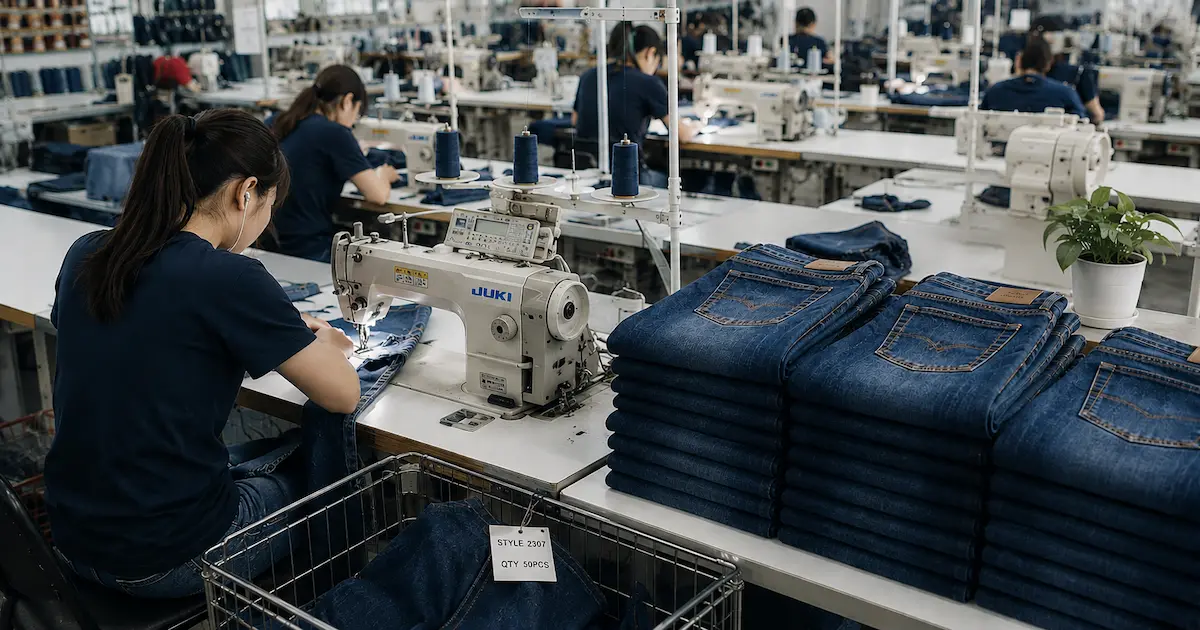
Therefore, small batch denim production in China has become a useful sourcing model for fashion startups, streetwear labels, independent designers and growing private label brands. It helps brands test custom jeans, denim jackets, shorts or skirts without taking on unnecessary inventory risk.
However, small batch production does not simply mean placing a tiny order. A good small batch strategy includes fabric planning, sample approval, wash consistency, MOQ control, production scheduling and repeat-order management.
This guide explains what small batch denim production means, how it differs from low MOQ and wholesale sourcing, and how brands can plan their first order and future reorders more effectively.
1. What Small Batch Denim Production Means
Small batch denim production means producing a limited quantity of denim garments with a controlled development and production process.
In many cases, a small batch order may range from around 50 to 300 pieces per style. However, the exact quantity depends on fabric availability, wash complexity, trims, size range and factory schedule.
For example, a startup brand may begin with 100 pairs of baggy jeans in one wash. Then, after testing customer response, the brand may reorder 200 more pieces or adjust the next batch with a different wash or size ratio.
As a result, small batch production gives brands more flexibility than traditional bulk manufacturing. It allows them to launch, learn and restock without committing too much capital too early.
2. Small Batch vs Low MOQ vs Wholesale vs Bulk Production
Many buyers confuse small batch production with low MOQ manufacturing. These ideas overlap, but they are not the same.
Low MOQ means the minimum quantity a factory will accept for one order. Small batch production describes a broader production strategy: brands use smaller runs to test products, control inventory and reorder based on demand.
Meanwhile, wholesale sourcing and bulk production serve different business goals.
| Production Model | Best For | Main Advantage | Main Risk |
| Wholesale denim | Retailers and resellers that need available styles | Faster launch and product variety | Limited uniqueness |
| Low MOQ custom denim | Startups placing a first custom order | Lower entry barrier | Higher unit cost |
| Small batch production | Growing brands testing and reordering styles | Better inventory control | Fabric and wash consistency need planning |
| Bulk production | Proven bestsellers and large-volume brands | Lower unit cost | Higher inventory risk |
Therefore, the right choice depends on your current stage.
If you need immediate inventory, wholesale denim may work better. If you need an original fit, custom wash or private label trims, low MOQ custom production may fit your first order. However, if you want to test, reorder and grow step by step, small batch denim production gives you a more flexible long-term model.
3. Why Growing Brands Use Small Batch Denim Production
Small batch denim production helps brands manage risk while still building original products.
First, it reduces inventory pressure. Instead of ordering thousands of pieces before proving demand, a brand can test one or two styles with a focused quantity.
Second, it protects cash flow. Because the brand buys fewer units at the beginning, more money stays available for marketing, content creation, product photography and future restocks.
Third, it supports drop culture. Many streetwear and fashion brands now prefer limited releases, seasonal capsules and quick product tests. Small batch production fits this model because it allows brands to launch smaller collections more frequently.
In addition, small batch production helps brands improve products over time. After the first drop, customers may give feedback on fit, length, wash color or sizing. Then, the brand can adjust the next run instead of being stuck with a large amount of unsold inventory.
4. How a Denim Factory Plans Small Batch Orders
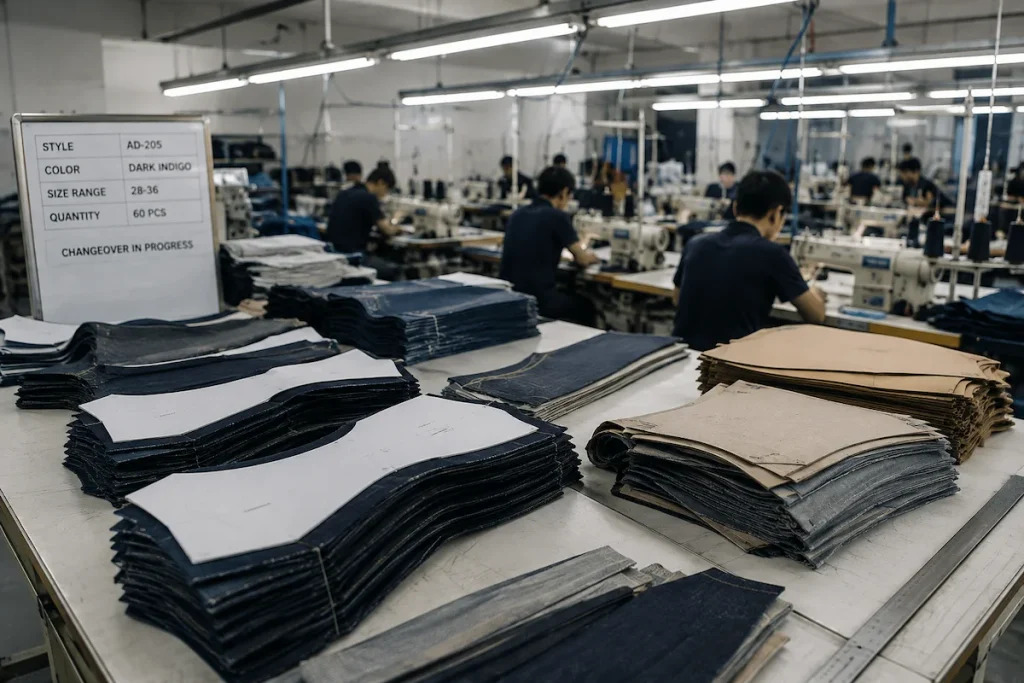
A small batch order still needs a professional production process. Although the quantity may be smaller, the factory must still manage fabric, cutting, sewing, washing, finishing and inspection carefully.
A typical small batch production process includes:
– Design review
– Fabric and wash confirmation
– Pattern or base fit selection
– Sample development
– PP sample approval
– Fabric cutting
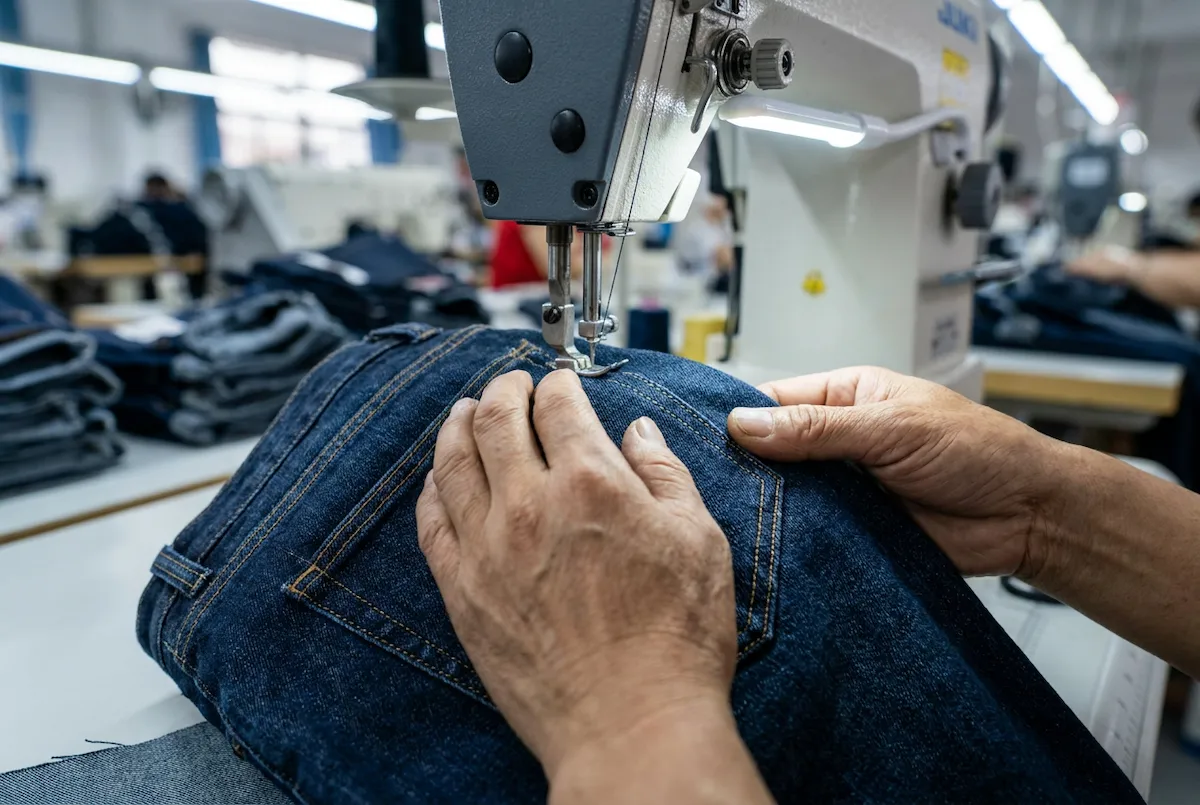
– Sewing and assembly
– Washing and finishing
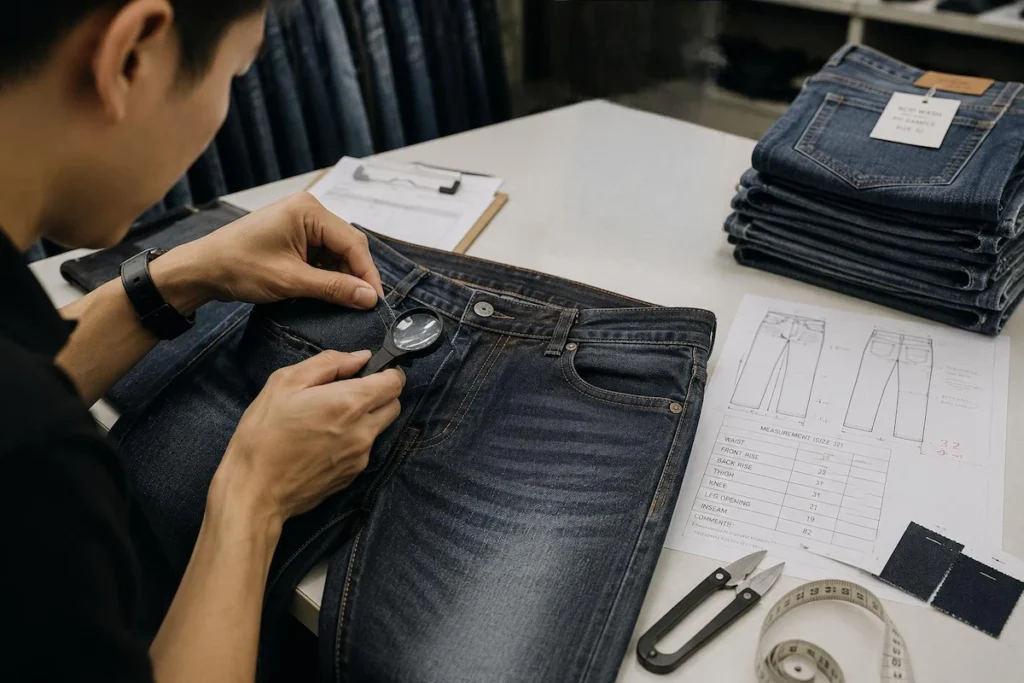
– Measurement and quality checks
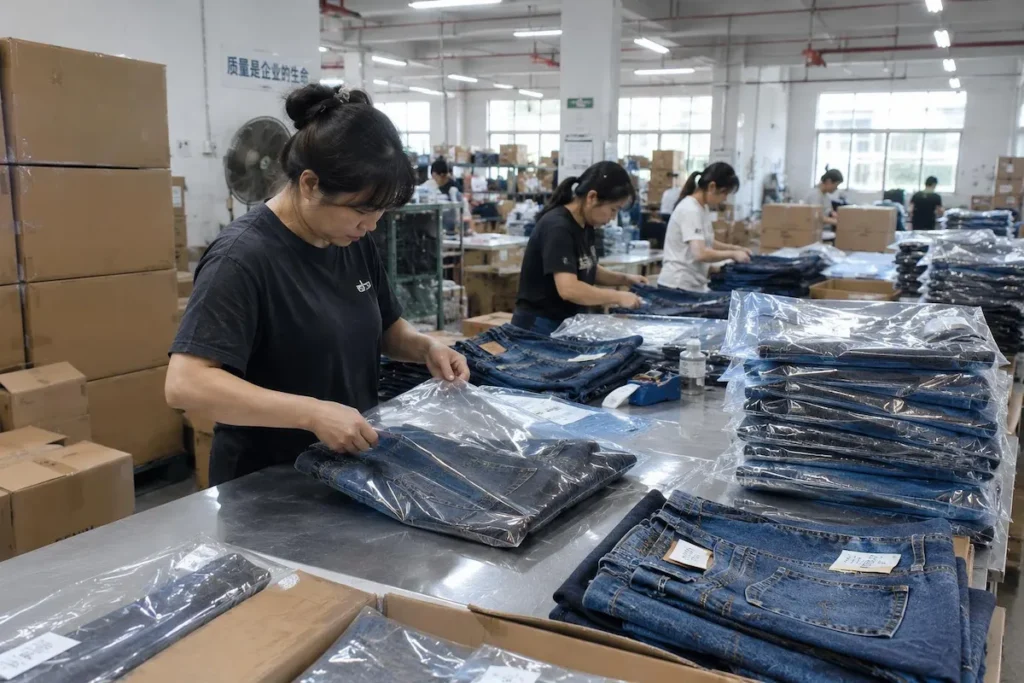
– Packing and shipment
However, small batch orders require tighter planning because small quantities leave less room for error. If a fabric runs out, a reorder may show color differences. If the wash standard changes, the second batch may not match the first batch.
Therefore, brands should confirm fabric availability, wash references and reorder possibilities before placing the first order.
5. MOQ, Lead Time and Cost Expectations
Small batch denim production usually carries a higher unit cost than bulk production. However, it often lowers the total business risk.
MOQ may start from around 50 to 100 pieces per style for many custom denim projects. In some cases, selected stock fabrics and simpler designs may allow lower starting quantities. However, complex washes, custom trims, special fabrics or extended size ranges may require higher minimums.
Lead time also depends on project complexity. As a planning reference:
| Stage | Planning Timeline |
| Fabric and design review | 2-5 days |
| Sample development | 7-15 days |
| Sample revision if needed | 7-10 days |
| Bulk production after approval | 25-45 days |
| Shipping | Depends on destination and method |
These timelines can change based on fabric availability, wash testing, trim development and factory schedule.
In addition, brands should remember that small batch cost includes more than sewing. The final cost may include pattern development, sampling, fabric, washing, trims, packaging, inspection and shipping.
For a full pricing breakdown, see our custom jeans manufacturing cost guide.
6. How to Plan Your First Small Batch Denim Drop
A strong first drop should stay focused. Many new brands try to launch too many fits, washes and sizes at once. As a result, they spread the budget too thin and make production harder to control.
Instead, start with a simple structure.
For example, your first drop may include:
– One core fit
– One or two washes
– A focused size range
– One trim package
– One packaging style
– A clear reorder plan
This approach helps you test the market more clearly. If the first fit sells well, you can reorder it. If customers request a different wash or length, you can adjust the next batch.
In addition, you should plan your size ratio carefully. A poor size mix can create dead stock even when the style sells well. Therefore, review your target market, customer body type and previous sales data if available.
7. How to Plan Reorders Without Losing Consistency
Reorders are where small batch denim production becomes valuable. However, reorders also create technical risks.
The most common issue is batch inconsistency. Fabric from a new dye lot may look slightly different. A wash effect may shift if the washing recipe changes. Trims may vary if the original supplier runs out of the same button, rivet or patch.
Therefore, brands should plan reorders from the beginning.
Before the first production run, confirm:
– Whether the fabric can be reordered
– How long the fabric supplier can hold or repeat the fabric
– Whether the same wash recipe can be repeated
– Whether buttons, rivets, labels and patches can be reordered
– Whether the factory keeps the pattern and size specs
– Whether the approved sample and production records stay on file
In addition, brands should approve new fabric swatches or wash samples for repeat orders when needed.
This step reduces the risk of visible differences between the first and second batch.
8. Common Risks in Small Batch Denim Production
Small batch production gives brands flexibility, but it still has risks.
Common risks include:
– Higher unit cost than bulk orders
– Limited fabric availability
– Color differences between repeat batches
– Wash inconsistency
– Custom trim MOQ that exceeds garment quantity
– Longer timeline for complex samples
– Limited size range due to small quantity
– Higher shipping cost per unit
– Over-customizing before market validation
However, brands can reduce these risks with better planning.
For example, stock fabric can help lower MOQ and shorten lead time. A simpler first trim package can reduce cost. A clear PP sample can protect bulk quality. Meanwhile, a focused size range can reduce inventory pressure.
The goal is not to make the cheapest jeans. Instead, the goal is to build a production model that supports testing, learning and repeat orders.
9. What to Prepare Before Contacting a Small Batch Denim Factory
A factory can give a better quotation when you provide clear project details.
Before contacting a manufacturer, prepare:
– Product type, such as jeans, jacket, shorts or skirt
– Men’s, women’s or unisex category
– Reference photos
– Tech pack if available
– Target quantity
– Size range
– Size ratio if available
– Wash reference
– Fit direction
– Trim and branding needs
– Packaging requirements
– Target price range
– Shipping destination
– Expected launch date
– Reorder plan if available
If you do not have a complete tech pack, reference photos and clear notes can still help start the discussion. However, the more detail you provide, the more accurate the factory’s quotation and timeline will be.
For startup planning, see our guide on how to start a denim brand with custom jeans.
10. How Aeedenim Supports Small Batch Denim Production
Aeedenim works with fashion startups, streetwear labels, independent designers and growing private label brands that need flexible custom denim production.
For small batch denim projects, we can support:
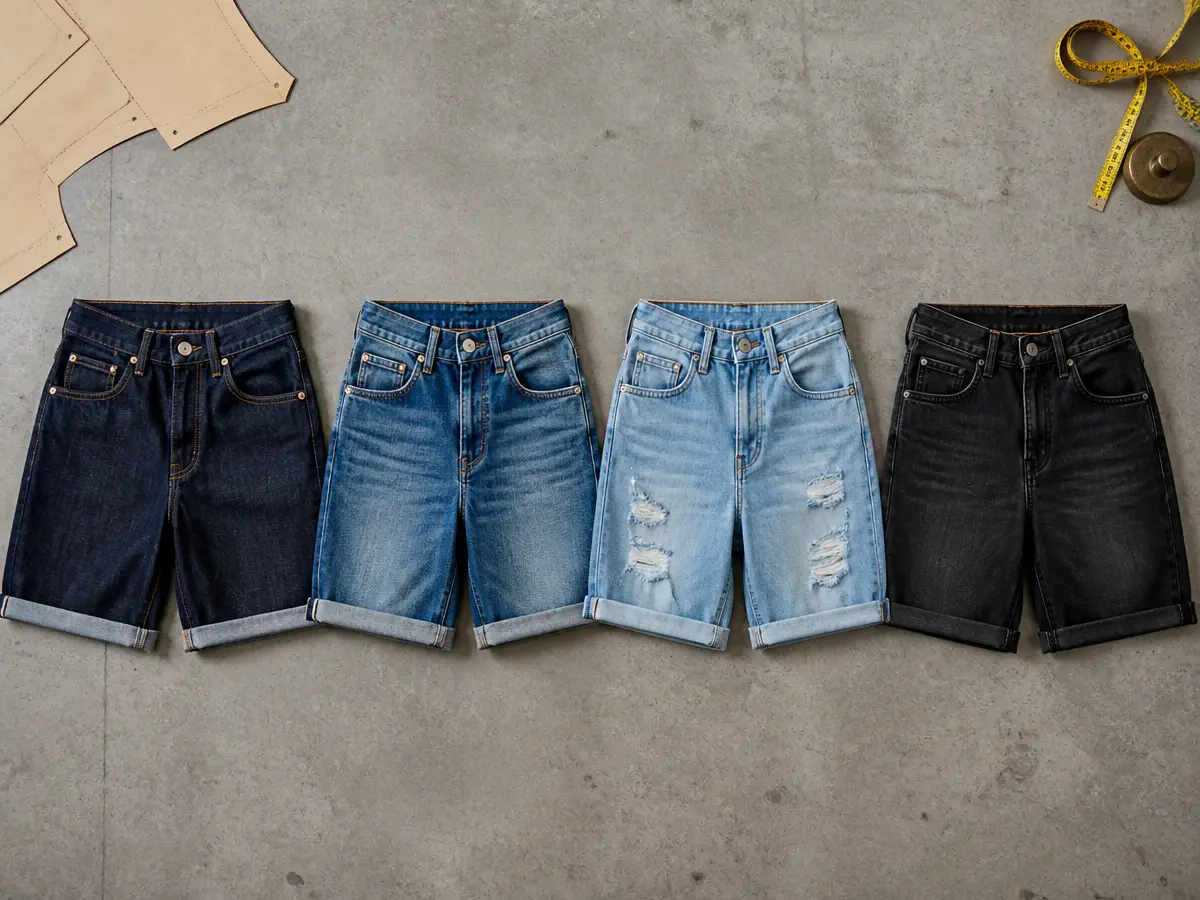
– Custom jeans, denim jackets, shorts, skirts and denim sets
– Low MOQ options depending on fabric and design requirements
– Stock fabric recommendations for selected projects
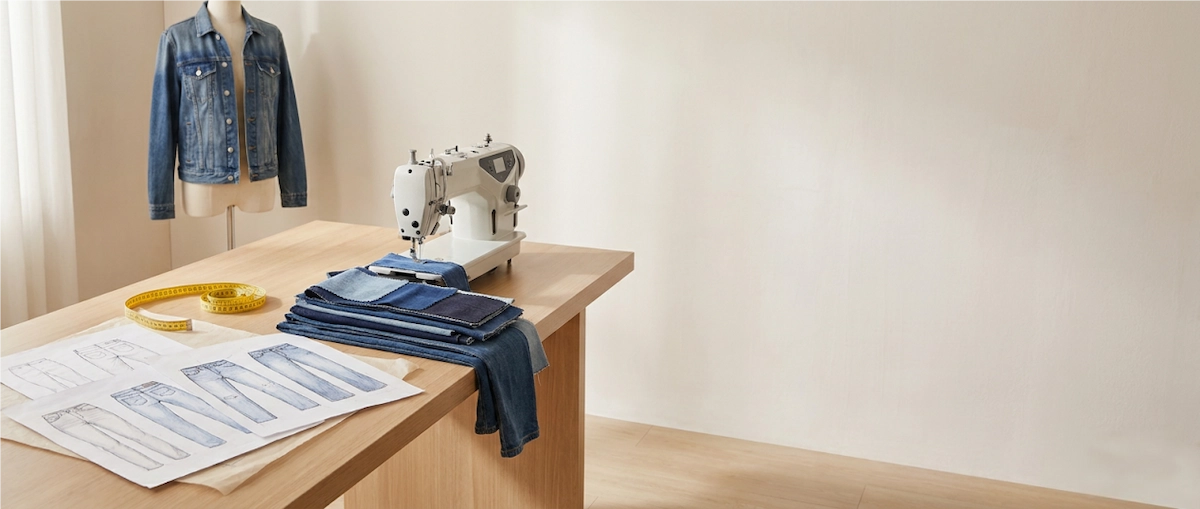
– Fit and sample development
– Wash reference review
– Enzyme, stone, acid, snow, rinse, bleach and laser wash options
– Private label trims and packaging
– Distressed, ripped, embroidered or rhinestone denim options
– Sample development before bulk production
– Reorder planning for repeat styles
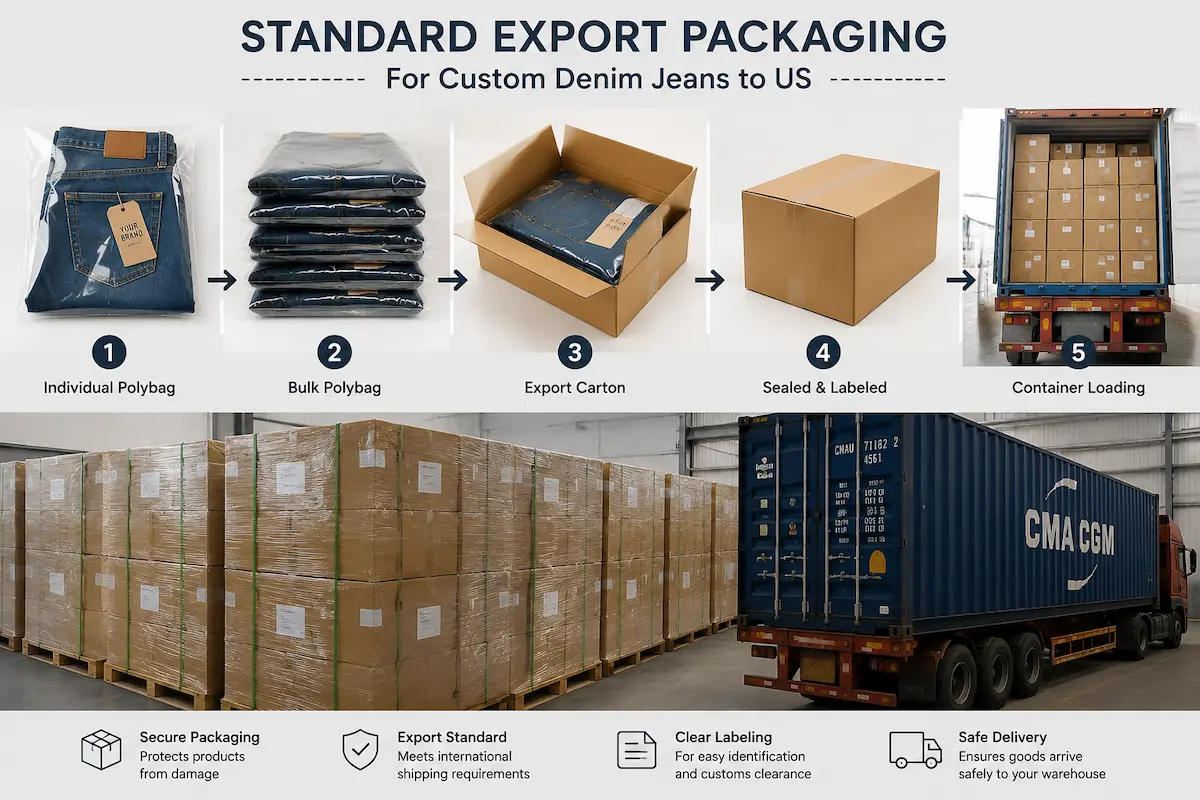
– Export packing and shipping coordination
Our team can review your reference photos, target quantity, fabric preference, wash idea and branding requirements before sampling. Then, we can help you decide whether your project fits wholesale sourcing, low MOQ customization or small batch production.
11. FAQ
(1) What is small batch denim production?
Small batch denim production means producing a limited quantity of denim garments with a controlled production process. It often helps brands test products, reduce inventory risk and reorder based on real demand.
(2) What is the MOQ for small batch denim production in China?
MOQ depends on fabric, wash, trims and design complexity. Many small batch custom denim projects may start from around 50 to 100 pieces per style, while some simpler projects using selected stock fabrics may allow lower starting quantities.
(3) Is small batch denim more expensive per unit?
Yes, small batch production usually costs more per unit than bulk production. However, it reduces total inventory risk because brands do not need to buy thousands of pieces before proving demand.
(4) How is small batch different from low MOQ?
Low MOQ refers to the minimum order quantity a factory accepts. Small batch production refers to a production strategy where brands use smaller runs to test products, manage inventory and plan repeat orders.
(5) How long does a small batch denim order take?
Timeline depends on fabric, wash, trims, sampling and production schedule. As a planning reference, sampling may take around 7 to 15 days, while bulk production after approval may take around 25 to 45 days.
(6) Can I add private label trims to small batch denim?
Yes, many small batch denim projects can include private label trims such as woven labels, patches, hang tags and packaging. However, custom trims may have their own MOQ and lead time.
(7) Can small batch denim orders be reordered?
Yes. Reorders often become easier after the factory confirms the pattern, wash and trims. However, brands should confirm fabric availability and wash consistency before each repeat order.
(8) What should I send to Aeedenim for a small batch project?
Send your reference photos, target quantity, size range, fabric preference, wash reference, branding requirements, shipping destination and launch timeline. If you have a tech pack or physical sample, include it as well.
Start Your Small Batch Denim Project.
Small batch denim production in China can help growing brands test new styles, control inventory and build a repeat-order system without overcommitting to large bulk quantities.
Contact Aeedenim to discuss your custom jeans, denim jackets or private label denim project. Our team can review your design, MOQ, fabric, wash and sampling needs, then help you plan a practical small batch production path.