manager@aeedenim.com
How to Choose a Reliable Custom Jeans Manufacturer in China (2026 Guide)

For fashion startups, streetwear brands and independent designers, finding a reliable custom jeans manufacturer in China is one of the most important decisions in building a denim collection.
The right manufacturing partner can help you develop better products, reduce production risks and scale your brand with more confidence. The wrong partner can lead to poor fit, inconsistent washes, delayed delivery and damaged customer trust.
China remains one of the world’s major denim manufacturing centers, with many factories offering custom jeans production, private label denim and OEM/ODM services. However, not every supplier that appears in search results is the right fit for your brand.
This guide explains how to choose a reliable custom jeans manufacturer in China and what to check before starting sample development or bulk production.
1. Factory vs Trading Company: Know Who You Are Working With
The first step is understanding whether you are speaking with a direct factory, a trading company or a sourcing agent. Each option can help produce jeans, but the working process is different.
| Factor | Direct Denim Factory | Trading Company |
| Communication | Direct with production or merchandising team | Middle layer between buyer and factory |
| Pricing | Fewer middle layers | May include additional markup |
| Quality Control | Usually managed closer to production | Depends on supplier management |
| Customization | Faster feedback on pattern, wash and trims | Changes may take longer to confirm |
| Flexibility | Easier to adjust production details | Depends on factory relationship |
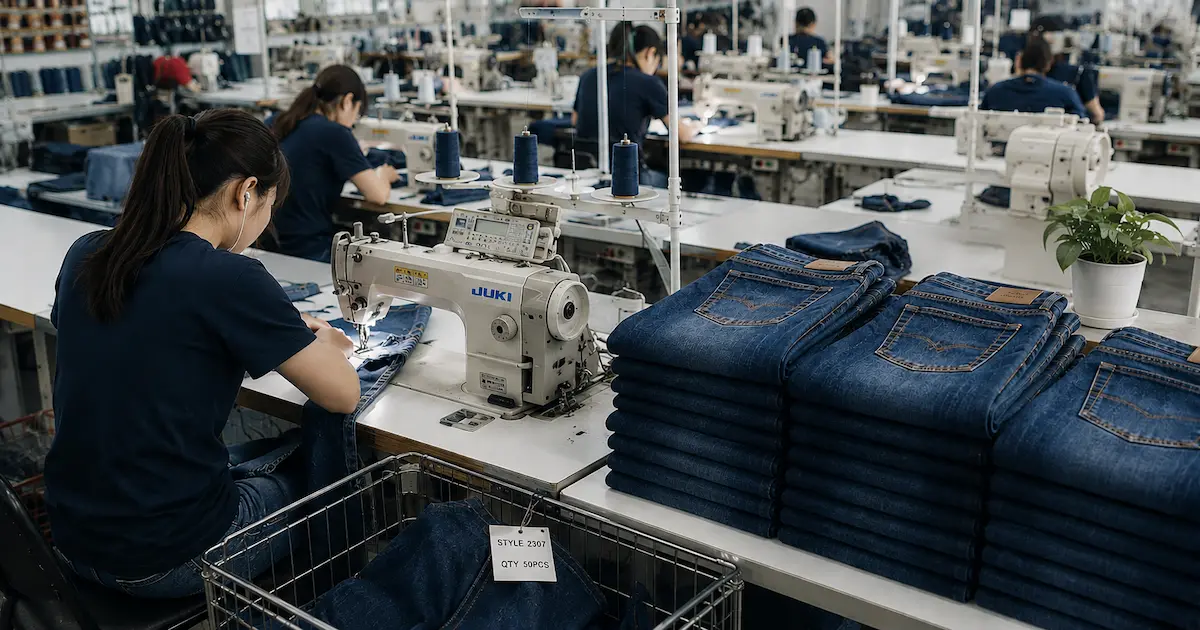
A reliable custom jeans manufacturer should be transparent about its production setup. You can ask whether they have their own pattern team, sewing lines, washing resources and quality inspection process.
A trading company is not always a bad option, but for custom denim development, direct communication with the production team can reduce misunderstandings and speed up problem-solving.
At Aeedenim, we support custom denim development with pattern making, sample development, sewing, washing coordination and quality inspection under one production management process.
2. Verify the Factory’s Denim Production Capability
A factory’s claimed capability and real production ability may be different. Before placing an order, check whether the supplier truly understands denim production.
(1) Denim Specialization
Jeans are more complex than many basic garments. A denim-focused factory usually has more experience with:
– Denim pattern making
– Heavy fabric sewing
– Waistband and pocket construction
– Shrinkage control
– Washing effects
– Hardware and rivet placement
– Fit adjustment after washing
If a factory claims to produce every category, from T-shirts to bags and shoes, ask more carefully about their denim experience.
(2) Monthly Capacity
Production capacity should match your order size. A very small workshop may struggle with larger bulk orders, while a very large factory may not be flexible enough for small-batch custom projects.
Aeedenim supports both small-batch development and bulk denim production, with monthly production capacity around 30,000 to 50,000 units depending on product type and production schedule.
(3) Washing Capability
Denim is strongly defined by its wash. A professional jeans manufacturer should either have in-house washing capability or work with a stable washing partner under clear quality control.
Good washing management helps improve:
– Sample-to-bulk consistency
– Color control
– Shrinkage control
– Custom wash development
– Production timeline
– Quality inspection before shipment
Common denim wash options may include enzyme wash, stone wash, acid wash, snow wash, rinse wash, laser effects and other custom washing processes depending on fabric and design requirements.
(4) Sample Room and Pattern Development
A dedicated sample process is important for custom jeans production. The factory should be able to develop a sample from:
– Tech packs
– Reference photos
– Existing samples
– Hand sketches
– Target measurements
– Brand fit standards
A strong sample room helps brands identify fit, wash, construction and trim issues before bulk production.
3. Quality Control Systems That Matter
A reliable denim factory should have a clear quality control process, not only verbal promises.
Important QC stages may include:
| QC Stage | What Should Be Checked |
| Incoming Material Check | Fabric defects, color, shrinkage, trims and labels |
| In-Process Inspection | Stitching, measurements, pocket placement, hardware and washing details |
| Final Inspection | Finished garment measurements, appearance, wash consistency and packing |
| Pre-Shipment Check | Random inspection before shipment, carton marking and packing condition |
For some orders, AQL inspection standards can be used during final inspection when required by the buyer. The important point is that the factory should be able to explain how quality is checked before shipment.
Before placing an order, ask:
– Do you inspect fabric before cutting?
– Do you check measurements during sewing?
– How do you control wash consistency?
– Can you provide inspection photos or reports?
– What happens if bulk goods do not match the approved sample?These questions help you understand whether the supplier has a real QC process.
4. Communication and Export Experience
Even a technically capable factory can fail if communication is slow or unclear. Custom jeans production requires frequent confirmation of fabric, fit, wash, trims, samples and delivery schedule.
Before committing to a manufacturer, check:
– Can the team understand English tech packs and design briefs?
– Do they respond within a reasonable time?
– Do they ask detailed questions before quoting?
– Can they explain production risks clearly?
– Have they shipped to your target market before?
– Can they support labeling and packing requirements for export orders?
A reliable denim factory in China should have export-oriented staff who understand international buyer expectations and can communicate clearly throughout the production process.Good communication is especially important for startups and independent brands that may not have complete tech packs at the beginning.
5. MOQ, Pricing and Payment Terms
(1) MOQ for Custom Jeans
MOQ varies depending on fabric, wash, trims, size range and design complexity. Some traditional factories require high minimums, while smaller custom denim projects need more flexible solutions.
For many custom jeans projects, MOQ may start from around 50 to 100 pieces per style or color, depending on stock fabric availability, washing requirements and customization details.
Highly customized fabric, special trims, complex washing or custom packaging may require higher minimums.
(2) Pricing Transparency
A professional manufacturer should explain what affects the final cost. Custom jeans pricing may include:
– Fabric cost
– Washing cost
– Trims and hardware
– Labels and packaging
– Pattern making
– Sample development
– Sewing labor
– Quality inspection
– Packing and shipping requirements
A very low price may look attractive at first, but it can create risk if fabric quality, washing control or QC is weak.
(3) Payment Terms
Payment terms vary by factory and order size. Common arrangements may include a deposit before production and balance before shipment.
Be cautious if a supplier asks for full payment upfront without clear sample approval, production details or written order confirmation.
6. Sampling Process and Timeline
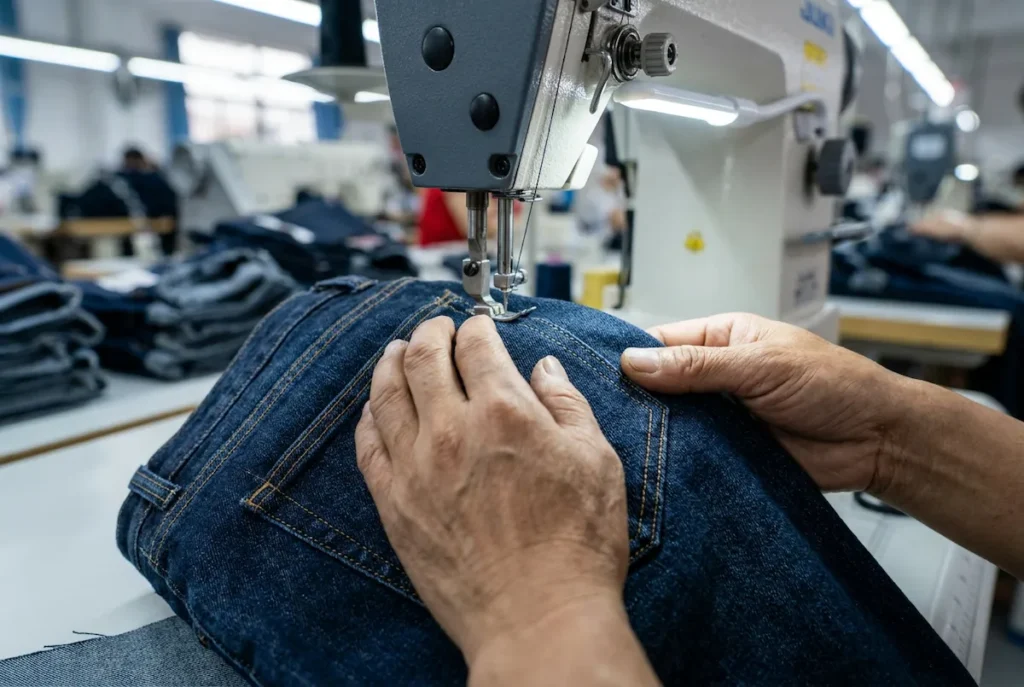
Sampling reveals the real capability of a custom jeans manufacturer. A well-organized sample process helps reduce risk before bulk production.
(1) Proto Sample
A proto sample is usually made in the base size to check fit, silhouette, construction and design details. It may not use final wash or final trims.
Typical timeline may be around 7 to 15 days after details are confirmed, depending on fabric and design complexity.
(2) Size Set Sample
A size set sample checks whether the grading works across multiple sizes. This is important for brands selling across a wider size range.
It helps verify:
– Waist and hip balance
– Rise
– Thigh width
– Knee position
– Leg opening
– Inseam
– Overall silhouette consistency
(3) Pre-Production Sample
A pre-production sample should use the confirmed fabric, final wash, trims, labels and construction details. It represents what bulk production should follow.
Bulk production should not begin until the pre-production sample is approved.
7. What to Prepare Before Contacting a Custom Jeans Manufacturer
The more clearly you prepare your project details, the faster a manufacturer can evaluate feasibility, MOQ, sample cost and production timeline.
Before contacting a factory, prepare as much of the following as possible:
– Design reference images
– Tech pack if available
– Target quantity
– Size range
– Men’s or women’s fit direction
– Wash effect
– Trim and branding requirements
– Custom labels, buttons or patches
– Packaging requirements
– Target price range
– Delivery timeline
– Target market
– Any reference sample photos or measurements
If you do not have a complete tech pack, you can still start with clear reference images, measurements and design notes. A custom denim manufacturer can help guide the next steps during sample development.
8. Red Flags to Avoid
Some warning signs may indicate that a supplier is not the right partner for your brand.
Be careful if a factory or supplier:
– Refuses to share factory photos or videos
– Avoids video calls showing the sample room or production area
– Gives a quote without asking about fabric, wash or measurements
– Offers a price much lower than other suppliers for the same specifications
– Asks for full payment before any clear order confirmation
– Has no written QC process
– Responds slowly or vaguely to technical questions
– Claims to produce too many unrelated product categories
– Cannot explain sampling steps
– Cannot provide export packing or shipping experienceA professional custom jeans manufacturer should be transparent, responsive and able to explain the production process clearly.
9. How Aeedenim Supports International Denim Brands
Aeedenim is a custom denim manufacturer in China working with fashion startups, streetwear brands, independent designers and private labels.
We support custom denim projects with:
– Pattern making and sample development
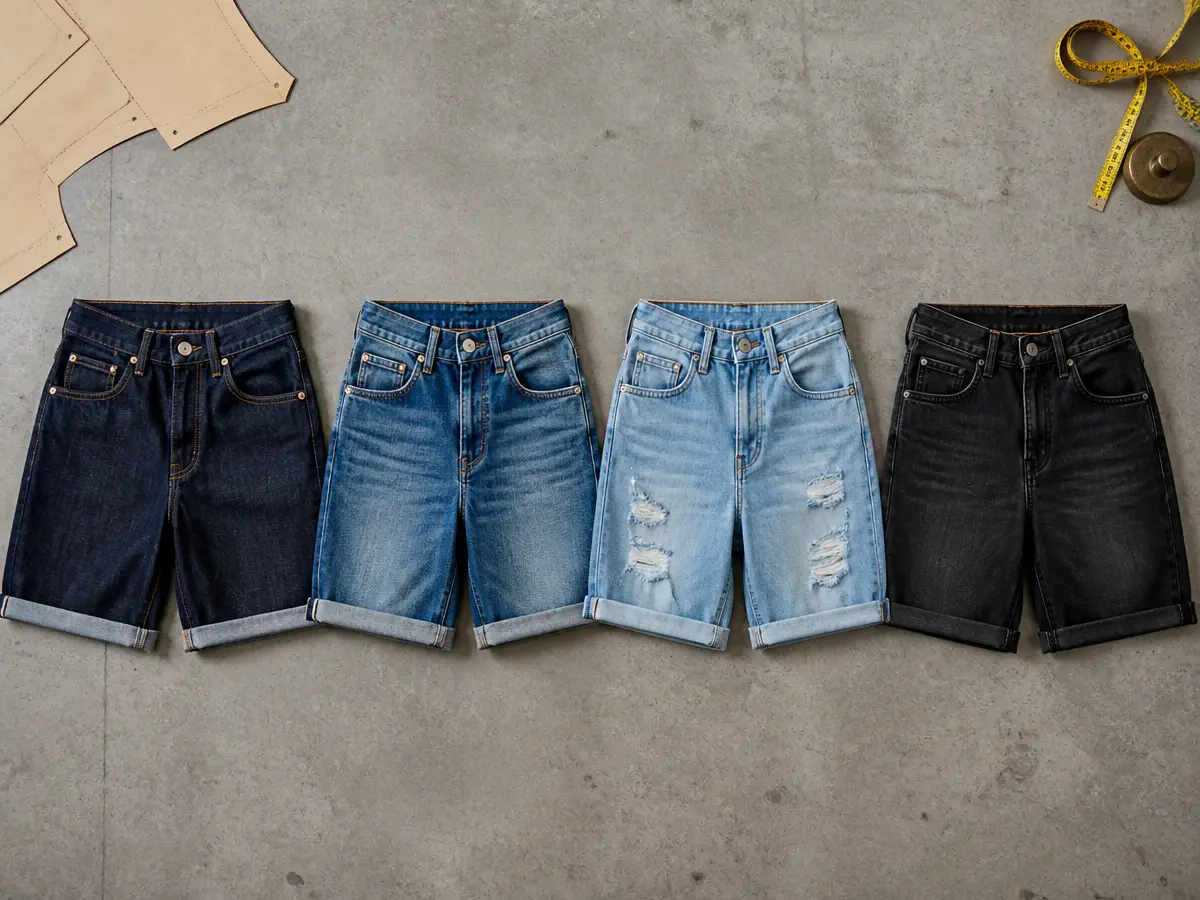
– Custom jeans, denim jackets, shorts, skirts and denim sets
– Denim sewing and production management
– Washing options such as enzyme, stone, acid, snow wash, rinse wash and laser effects
– Embellishment options such as embroidery, rhinestones and printed details depending on design requirements
– Private label branding with custom buttons, patches, labels and packaging
– Quality inspection before shipment
– Flexible MOQ depending on fabric, wash and design complexity
– Sample development before bulk production
– Export support for international orders
Our team helps brands review design references, confirm production details and develop samples before moving into bulk production.
10. FAQ
(1) How do I find a reliable jeans manufacturer in China?
Look for a denim-focused factory with experience in pattern making, washing, sampling and quality control. Ask for factory photos, sample process details, production capability and export experience before placing an order.
(2) What is the difference between OEM and ODM jeans production?
OEM means the factory produces jeans based on your design, tech pack or sample. ODM means the factory helps develop the design based on your direction and provides suggestions or ready development options. Aeedenim supports both OEM and ODM denim projects.
(3) How can I verify a factory’s quality before visiting?
You can request samples, ask for production photos or videos, arrange a video call and review the factory’s QC process. A physical sample is often the best way to evaluate fit, wash, stitching, trims and overall quality.
(4) What MOQ should I expect for custom jeans?
MOQ depends on fabric, wash, trims and design complexity. For many custom jeans projects, MOQ may start from around 50 to 100 pieces per style or color, depending on material availability and customization requirements.
(5) How long does custom jeans sampling take?
A custom jeans sample may take around 7 to 15 days after details are confirmed. More complex wash, trims, fabric sourcing or embellishment may require additional time.
(6) Should I choose a factory or trading company?
Both can work, but direct factories often provide faster technical feedback on pattern, washing and production details. For custom jeans, direct communication with the production team can reduce misunderstanding and improve development efficiency.
(7) What should I send to a custom jeans manufacturer?
Send your design reference, tech pack if available, target quantity, size range, fabric preference, wash effect, branding requirements, target price and delivery timeline. Clear information helps the factory give a more accurate quotation.
While we have long been a leader in male denim production, Aeedenim has significantly expanded its facility to support female-led fashion labels. We are proud to showcase our latest collection of custom women denim jeans, featuring high-waist silhouettes, wide-leg fits, and Y2K-inspired styles—all manufactured with the same 2026 reliability standards mentioned in this guide.
Start Your Custom Jeans Project.
Looking for a reliable custom jeans manufacturer in China for your denim collection?
Contact Aeedenim to discuss your design, fabric, wash, MOQ and production requirements. Our team can help you evaluate options, develop samples and prepare your custom jeans project for bulk production.
Ready to place an order? Read our import compliance guide for US and EU labeling, duties and shipping before you ship.