
 manager@aeedenim.com
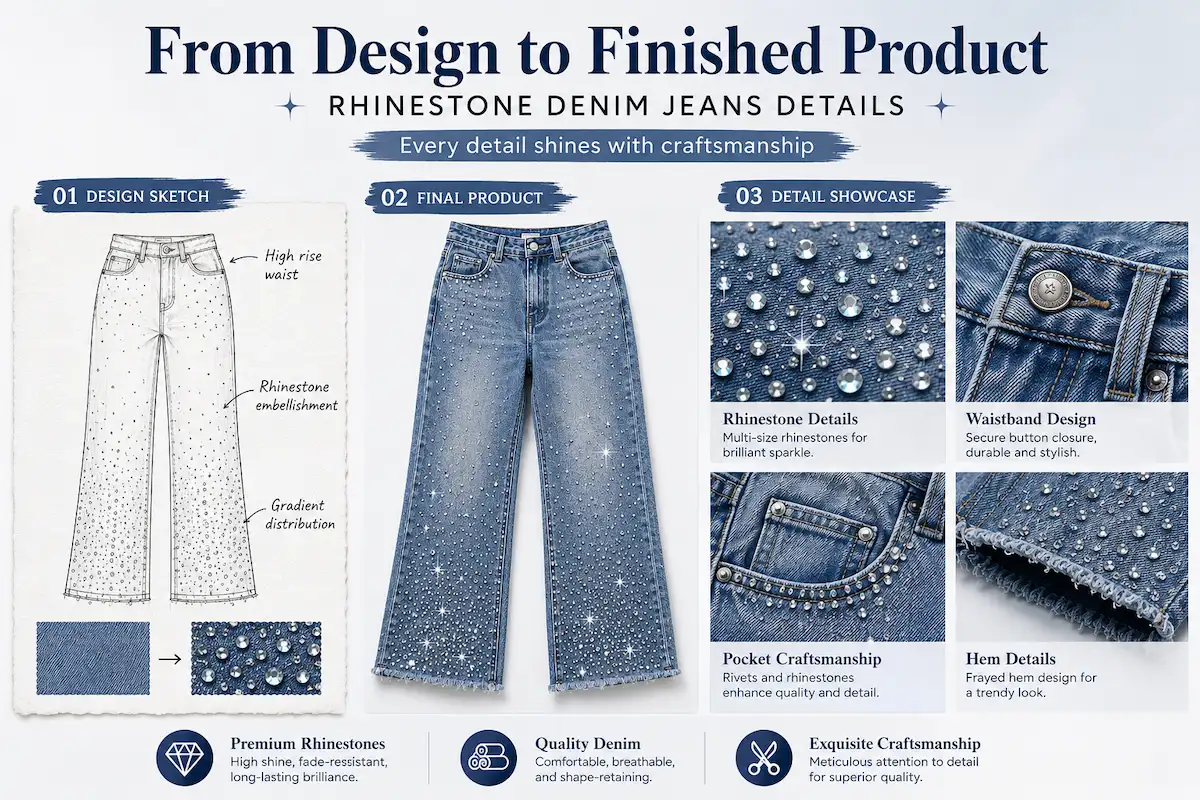
How to Make Custom Rhinestone Jeans with Complex Washes for Y2K Streetwear Brands

Y2K fashion and premium streetwear are driving a new wave of custom denim design. For many brands, standard blue jeans are no longer enough. They want denim pieces with stronger visual identity, such as rhinestone jeans, washed baggy jeans, embellished denim jackets and custom logo patterns.
However, producing custom rhinestone jeans is more complex than applying decoration onto finished denim. The factory must consider fabric weight, wash effect, shrinkage, rhinestone placement, adhesive strength and bulk production consistency.
For streetwear brands, independent designers and private labels, choosing the right rhinestone jeans manufacturer can make the difference between a high-value product and a production problem.
1. Why Rhinestone Jeans Are Popular in Y2K Streetwear
Rhinestone denim fits naturally into the Y2K and streetwear market because it combines vintage inspiration with strong visual impact. A simple jeans silhouette can become a statement piece when combined with the right wash, crystal layout and fit.
Popular styles include:
– Rhinestone baggy jeans
– Rhinestone flare jeans
– Stacked jeans with crystal details
– Washed denim jeans with logo rhinestone patterns
– Rhinestone denim jackets
– Distressed jeans with crystal accents
– Full-leg rhinestone motifs for stagewear or premium streetwear
For small and growing brands, rhinestone denim can also help create limited drops with a higher perceived value.
2. The Main Challenge: Washing and Rhinestone Durability
Denim production is different from basic garment decoration. Many jeans require enzyme wash, stone wash, acid wash, snow wash, whiskers, distressing or softening before they reach the final look.
The challenge is that rhinestones, adhesives and heat-press patterns may react differently after washing, rubbing and wearing. If the process is not planned correctly, common issues may include:
– Rhinestones falling off after washing
– Uneven placement in bulk production
– Glue marks on the denim surface
– Color difference after heavy washing
– Distorted patterns caused by shrinkage
– Weak adhesion around distressed or uneven fabric areas
This is why the production sequence matters. A reliable custom denim manufacturer should not only ask where the rhinestones go, but also how the denim will be washed, softened, finished and inspected.
3. Heat Press vs Manual Rhinestone Application
There are two common ways to apply rhinestones to denim: heat press application and manual placement. Each method has its own advantages depending on the design.
(1)Heat Press Rhinestone Application
Heat press is suitable for repeated patterns, logos, full-leg layouts and bulk production. It helps improve consistency when the design requires accurate placement across multiple pieces.
This method is often used for:
– Brand logos
– Symmetrical leg patterns
– Back pocket designs
– Repeated crystal motifs
– Medium to large production quantities
For heat press application, the factory must control temperature, pressure and pressing time based on fabric weight and rhinestone material.
(2)Manual Rhinestone Placement
Manual application is useful for irregular layouts, special art effects and designs around distressed areas. It gives more flexibility but requires experienced workers and careful inspection.
This method is often used for:
– Irregular crystal patterns
– Handmade Y2K effects
– Distressed and repaired details
– Custom sample development
– Premium limited-edition stylesFor many custom rhinestone jeans, the best solution may combine both methods depending on the pattern and production quantity.
4. Recommended Production Process for Washed Rhinestone Jeans
For complex wash and rhinestone denim, the process should be planned before bulk production begins. A common workflow may include:
(1)Design Review
The factory reviews your reference images, tech pack, size chart, wash effect, rhinestone layout and branding requirements. At this stage, the team should confirm whether the design is suitable for bulk production.
(2)Fabric and Wash Confirmation
Different denim fabrics react differently after washing. Shrinkage, color fading and hand feel should be considered before applying rhinestones.
Common wash options may include:
– Enzyme wash
– Stone wash
– Acid wash
– Snow wash
– Vintage wash
– Whisker effect
– Distressing
– Laser effect where available
(3)Sample Development
A sample helps test the real effect of the fabric, wash and rhinestone placement. For rhinestone jeans, sampling is especially important because small details can affect both appearance and durability.
(4)Wash-Before-Set or Protected Wash Planning
For many heavy wash styles, the wash process is completed before rhinestone application. This can help reduce the risk of rhinestones being damaged during strong washing.
For some special designs, a protected process may be needed, depending on the wash effect and decoration placement. The correct method should be confirmed during sampling.
(5)Bulk Production and Quality Check
During bulk production, quality control should check:
– Rhinestone placement
– Adhesion strength
– Wash consistency
– Garment measurements
– Stitching quality
– Hardware and trims
– Packing conditionA structured inspection process helps reduce the risk of inconsistent bulk goods.
5. Custom Options for Y2K Rhinestone Denim
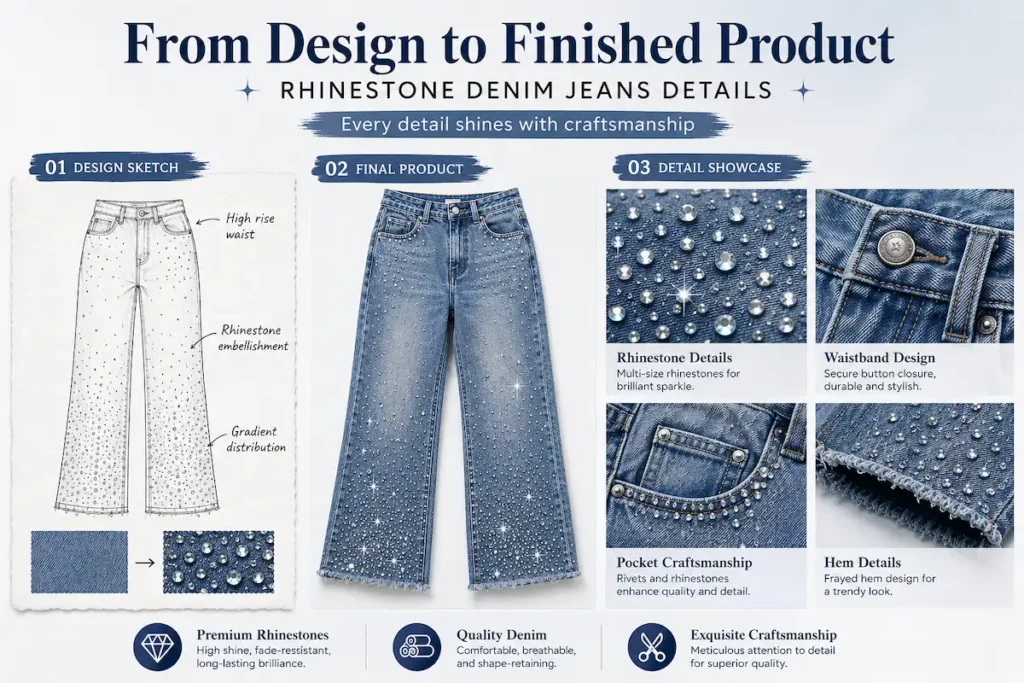
A professional rhinestone jeans manufacturer should be able to support more than one decoration method. For Y2K and premium streetwear brands, customization may include:
– Custom rhinestone logo patterns
– Full-leg crystal layouts
– Rhinestone pocket details
– Rhinestone denim jackets
– Distressed rhinestone jeans
– Embroidery with rhinestone accents
– Laser effect with crystal highlights
– Custom buttons, rivets and patches
– Private label tags and packaging
These options can be used for jeans, denim jackets, denim shorts, denim skirts and full denim sets.
6. MOQ, Sampling and Bulk Production
Rhinestone denim usually requires more planning than basic jeans because it involves both garment production and decoration work.
For complex rhinestone and washed denim styles, MOQ often depends on:
– Fabric availability
– Wash complexity
– Rhinestone pattern size
– Decoration method
– Size range
– Custom trims and packaging
– Order quantity per style and color
For many projects, small-batch production may start from around 50 to 100 pieces, depending on the design details. A sample is recommended before bulk production so the brand can confirm fit, wash effect, crystal placement and overall finishing.At Aeedenim, we work with fashion startups, streetwear labels, independent designers and private brands to develop custom denim products with flexible production solutions. Our team can help review your design, suggest practical production methods and prepare samples before bulk orders.
7. FAQ
(1)Can rhinestones be applied to washed jeans?
Yes. Rhinestones can be applied to washed jeans, but the production sequence should be planned carefully. For many heavy wash styles, the denim is washed first and rhinestones are applied afterward to help protect the decoration.
(2)Do rhinestones fall off after washing?
Rhinestone durability depends on the application method, adhesive quality, fabric surface, wash process and final inspection. A sample test is recommended before bulk production, especially for complex washes or large rhinestone patterns.
(3)What types of jeans can be made with rhinestones?
Common options include baggy jeans, flare jeans, stacked jeans, skinny jeans, denim shorts, denim skirts and denim jackets. Rhinestones can be used for logos, pocket details, side-leg patterns or full decorative layouts.
(4)What is the MOQ for custom rhinestone jeans?
MOQ depends on fabric, wash effect, rhinestone layout and custom trims. For many rhinestone denim projects, small-batch production may start from around 50 to 100 pieces per style or color.
(5)Can I customize rhinestone logo patterns?
Yes. Logo rhinestone patterns can be developed based on your artwork, reference image or tech pack. The factory should confirm the size, placement, crystal type and application method during sample development.
(6)How long does sampling take for rhinestone jeans?
Sampling time depends on the fabric, wash effect, rhinestone layout and trims. In many cases, a custom rhinestone jeans sample may take around 7 to 15 days after all details are confirmed.
8.Start Your Custom Rhinestone Denim Project
Looking for a rhinestone jeans manufacturer for your next Y2K streetwear collection?
Contact Aeedenim to discuss your custom rhinestone jeans, washed denim styles, sample development, MOQ and private label details. Our team can help turn your design idea into a production-ready denim product.