
 manager@aeedenim.com
How to Evaluate a Denim Factory: 5 Key Factors for Choosing a Reliable Jeans Manufacturer

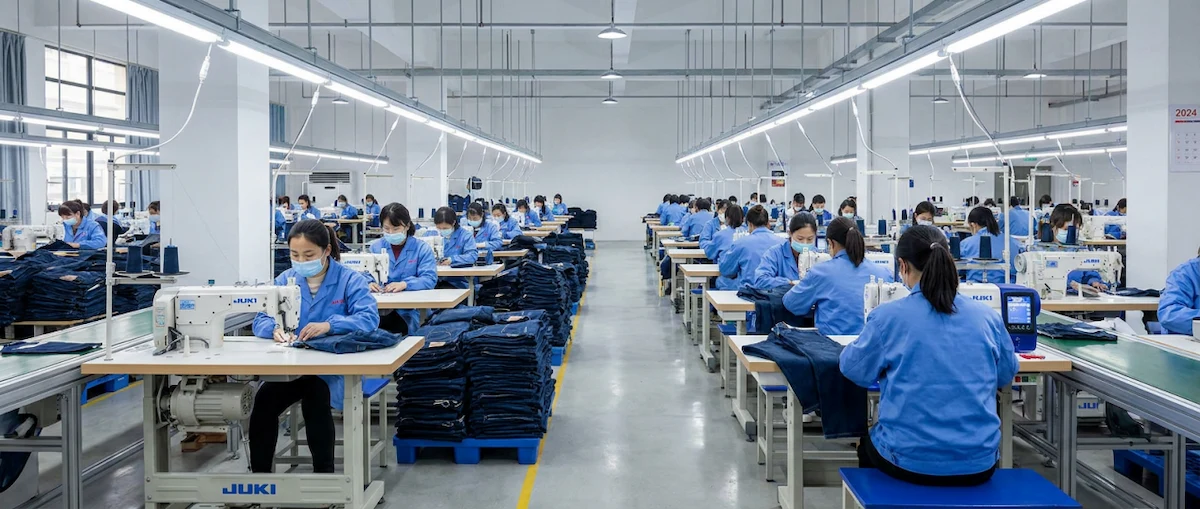
Choosing the right manufacturing partner is the most critical decision for any fashion brand. In the complex world of denim production, the gap between a “sample-making workshop” and a “professional industrial factory” is vast. A wrong choice can lead to inconsistent washes, late deliveries, and quality nightmares.
For global brands looking for a custom denim manufacturer, here are the 5 key indicators to evaluate a denim factory’s true capability.
1.R&D and Technical Design Capability
A reliable denim factory should be able to read tech packs, suggest fabric options, adjust patterns and identify production risks before bulk manufacturing. This is especially important for custom jeans, denim jackets and washed denim styles where fit and fabric behavior can change after washing.At Aeedenim, our team helps brands review designs, develop samples and make styles production-ready before bulk orders.
2.Manufacturing Scalability and Flexibility
Consistency is the hallmark of professional production. You need a partner who can handle both high-quality custom drops and large-scale bulk orders.
Key Question: What is their monthly capacity?
Aeedenim Standard: With a monthly capacity of 30,000 to 50,000 units, we provide the scalability global brands need while maintaining the precision of small-batch customization.
3.Advanced and Sustainable Washing Technology
Denim is made in the wash. However, traditional washing is water-intensive and chemically heavy. Modern global brands prioritize sustainability. Evaluation criteria should include the factory’s ability to execute complex washes (distressing, whiskers, ozone washing) using eco-friendly methods.
We support more responsible washing options, such as enzyme washing, ozone washing and process optimization where available, helping brands balance design effects, cost and environmental considerations.
4.Stringent Quality Control (QC) Protocols
Clear inspection standards should not just be written in a contract; they should be followed throughout production.A reliable factory must have a multi-stage QC process:
- IQC (Incoming Quality Control): Testing fabric shrinkage and colorfastness.
- In-Process QC: Checking stitching and hardware during assembly.
- Final Inspection: Measuring every finished garment against the approved spec sheet.
5.Communication and Professionalism
Language barriers and slow response times are the silent killers of fashion projects. A professional denim factory should have an export-oriented team that understands global market standards and communicates effectively in English. At Aeedenim, we pride ourselves on being a bridge between Chinese manufacturing excellence and global design vision.
Conclusion Evaluating a denim factory goes beyond looking at a price list. It’s about auditing their R&D, their sustainability footprint, and their commitment to quality.
Ready to elevate your denim line?Have a denim design or tech pack ready? Contact Aeedenim to discuss MOQ, sample development, washing options and bulk production for your next custom denim project.
FAQ
1.How do I know if a denim factory is reliable? A reliable denim factory should provide clear communication, sample development, stable production capacity, washing expertise and a structured quality control process.
2.What should I ask before choosing a jeans manufacturer? Ask about MOQ, sample time, bulk lead time, fabric options, washing techniques, custom labels, packaging and quality inspection standards.
3.Why is washing capability important in denim production? Washing affects color, shrinkage, hand feel and the final look of jeans. Poor washing control can cause inconsistent bulk production. Can small brands work with a denim factory? Yes. Some denim factories support low MOQ production, sample development and private label services for startups and small fashion brands.